
Borehole Drilling in Kiambu County, Kenya – GossTech Kenya Technologies
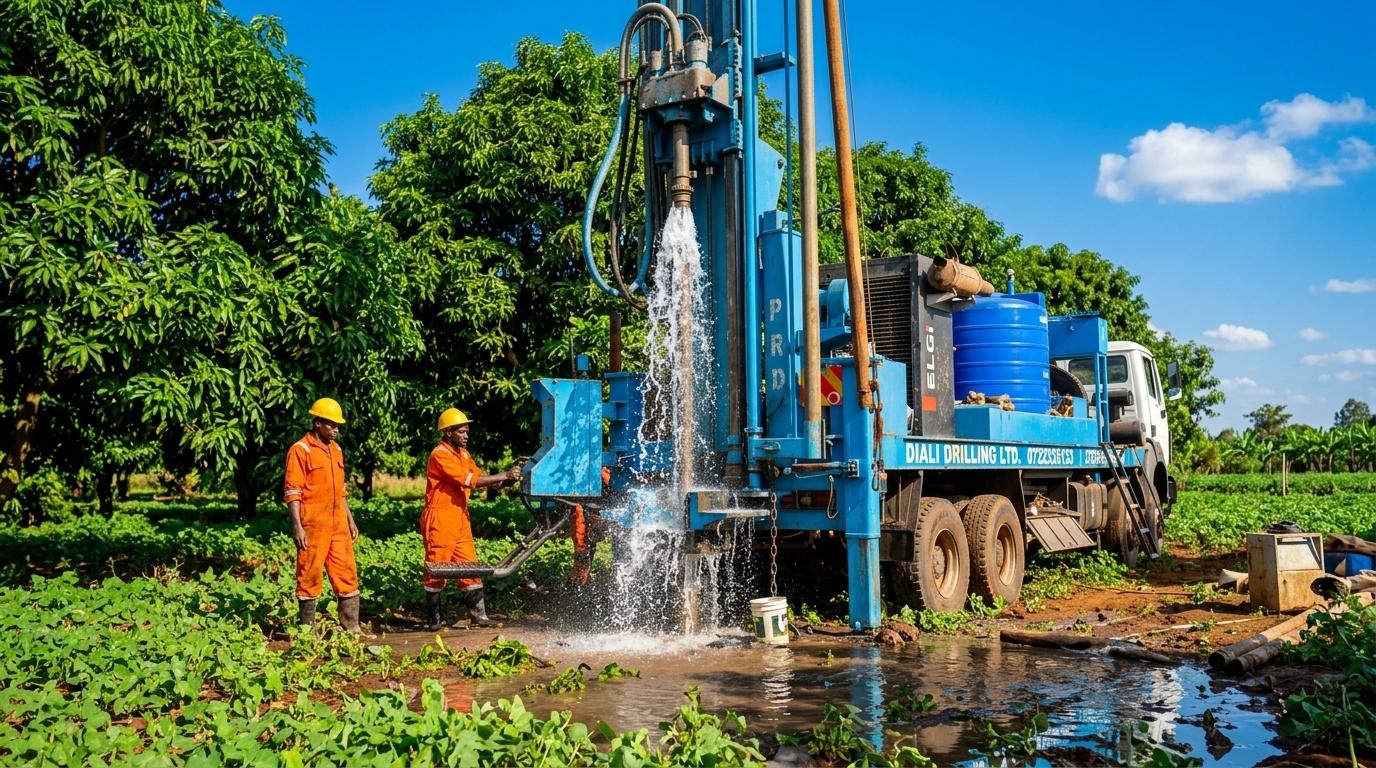
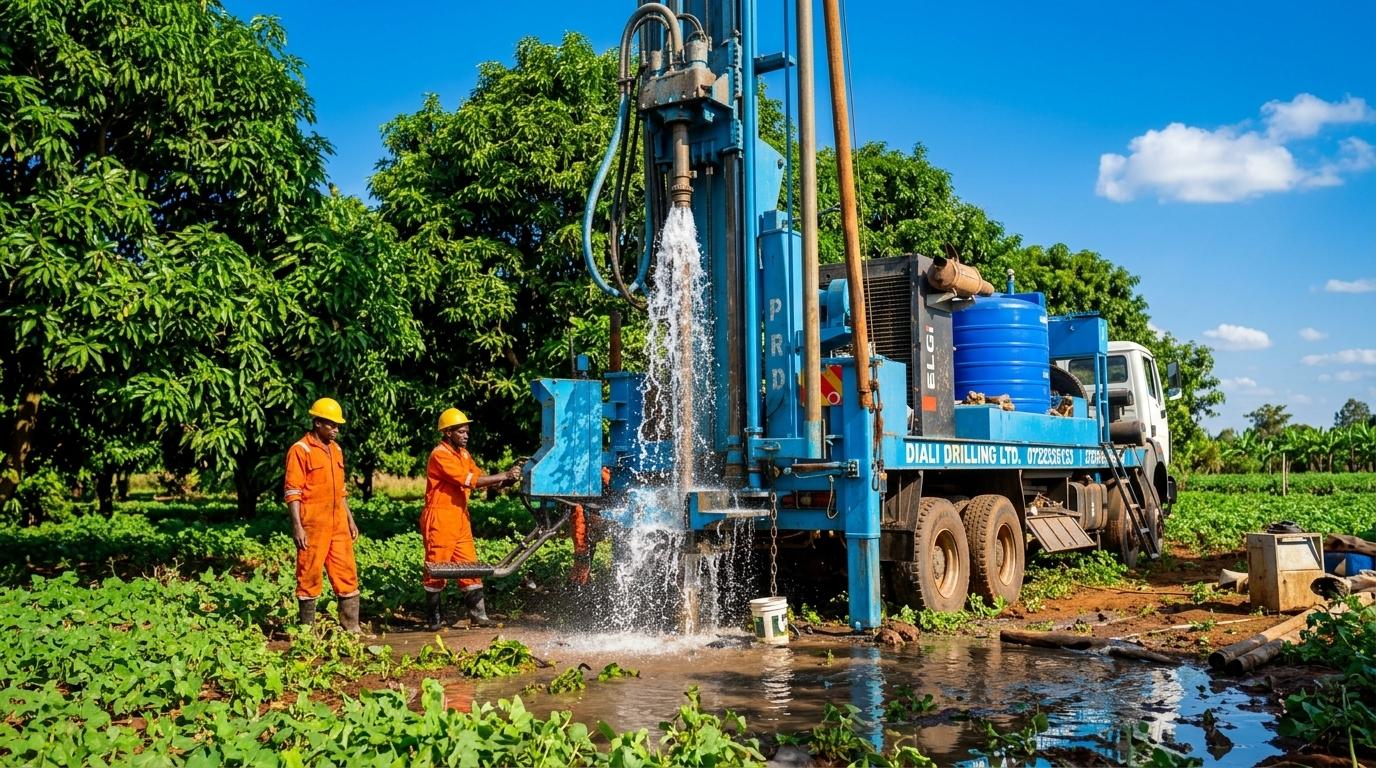
Kiambu County is one of Kenya’s fastest-growing counties, with expanding residential estates, urban centres, agricultural properties, commercial developments, institutions, industries and construction projects. The demand for dependable water continues to grow as homes, apartments, farms, businesses, schools and property developments seek reliable water supply solutions.
GossTech Kenya Technologies provides professional borehole drilling services in Kiambu County, including hydrogeological surveys, geophysical surveys, borehole drilling, casing installation, borehole development, pumping tests, submersible pump installation, solar borehole pumping, water storage, water treatment and complete water distribution systems.
We serve clients in Kiambu Town, Thika, Ruiru, Juja, Limuru, Kikuyu, Githunguri, Gatundu, Lari, Kabete, Karuri, Wangige, Banana, Ruaka, Ndumberi, Kirigiti, Ridgeways-border areas, Kamwangi, Chania, Mang’u, Uplands, Kiganjo and surrounding areas.
Whether you need water for a private home, apartment complex, farm, school, hospital, hotel, industrial facility, commercial building or irrigation project, proper borehole planning is essential before drilling begins.
Our service coverage: Kiambu County, Nairobi and Across Kenya.
Borehole drilling in Kiambu Town and Kiambu Central
Kiambu Town and the surrounding Kiambu Central area have experienced continued residential development, commercial growth and expansion of institutions. Boreholes can provide an additional water source for property owners whose water demand exceeds the capacity of existing supply arrangements.
GossTech Kenya Technologies provides borehole drilling services in Kiambu Town, Ndumberi, Kirigiti, Ting’ang’a, Riabai, Kiamumbi and surrounding areas.
Areas served around Kiambu Town
Kiambu Town
Ndumberi
Kirigiti
Ting’ang’a
Riabai
Kiamumbi
Kamiti
Thindigua
Muthaiga North-border areas
Githunguri Road areas
Kiambu Road developments
Ridgeways-border developments
Nearby residential estates
Rural properties and farms
Water infrastructure projects in Kiambu have included pipeline expansion serving areas such as Ndumberi, Ting’ang’a, Riabai and Kiamumbi, while boreholes have also been developed to supplement water supply in various parts of the county.
Kenya News Agency+1
Boreholes for Kiambu residential estates
Boreholes may be suitable for:
Standalone homes
Gated communities
Apartments
Rental units
Residential developments
Mixed-use buildings
Commercial premises
A private borehole may help property owners supplement municipal or community water supply.
Boreholes for commercial buildings
Commercial buildings may require water for:
Toilets and sanitation
Cleaning
Kitchens
Landscaping
Offices
Retail operations
Restaurants
Hotels
Tenant water supply
The borehole and storage system should be designed to meet the property’s actual water requirements.
Borehole drilling in Ndumberi
Ndumberi is a major residential and agricultural area in Kiambu County. It includes homes, farms, institutions, commercial premises and growing developments.
GossTech Kenya Technologies provides borehole drilling services in Ndumberi and surrounding locations.
Locations covered
Ndumberi
Kirigiti
Riabai
Ting’ang’a
Kiambu Town
Kamiti
Kiamumbi
Surrounding villages
Agricultural properties
Residential estates
Water supply for homes in Ndumberi
Homeowners may require boreholes to support household water consumption, gardening, laundry, cleaning and other domestic uses.
The installation may include:
Survey
Drilling
Casing
Pump
Storage tank
Tank stand
Distribution
Water treatment
Boreholes for agricultural properties
Agricultural boreholes may support:
Vegetable farming
Greenhouses
Dairy farming
Poultry
Livestock
Nursery operations
Irrigation
Farm residences
The pump and storage system should be selected according to the water demand and the borehole’s measured performance.
Borehole drilling in Thika
Thika is one of Kiambu County’s major urban, industrial, commercial and residential centres. Its surrounding areas include residential estates, factories, farms, institutions and expanding property developments.
GossTech Kenya Technologies provides borehole drilling services in Thika and the surrounding areas.
Areas served around Thika
Thika Town
Makongeni
Section 9
Section 3
Landless
Ngoigwa
Kiganjo
Gatanga-border areas
Gatuanyaga
Ngoliba
Munyu
Mang’u
Chania
Thika Greens
Kilimambogo-border areas
Juja-border areas
Surrounding estates and villages
Boreholes for Thika industries
Industrial facilities may require substantial water volumes.
Boreholes may support:
Manufacturing
Processing
Cleaning
Cooling
Sanitation
Commercial operations
Warehousing
Staff facilities
Industrial water systems require careful planning to establish water demand, required quality, storage, pumping capacity and treatment needs.
Boreholes for Thika residential developments
Thika has a variety of residential properties, including:
Private homes
Apartments
Rental properties
Gated communities
Estate developments
Mixed-use properties
Developers should consider borehole planning during the early construction stages.
Borehole drilling in Juja and Juja Farm
Juja has experienced substantial residential, educational, commercial and property development. Areas around Juja, Juja Farm and Kalimoni have a growing demand for reliable water sources.
GossTech Kenya Technologies provides borehole drilling services in Juja and surrounding locations.
Areas covered
Juja Town
Juja Farm
Kalimoni
Theta
Gachororo
Murera
Witeithie
Kenyatta Road
Gatundu Road-border areas
Thika Road developments
Surrounding residential estates
Farms and rural settlements
Boreholes for Juja residential estates
Private boreholes can be considered for:
Homes
Apartments
Rental units
Student accommodation
Gated communities
Residential estates
Commercial developments
A borehole can be designed to supplement an existing water supply or serve as an independent water source where site conditions and approvals permit.
Boreholes for student accommodation
Juja has a significant educational and student accommodation market.
Water requirements may include:
Student hostels
Rental apartments
Kitchens
Bathrooms
Laundry
Cleaning
Sanitation
A borehole installation should account for the number of occupants and the expected peak demand.
Boreholes for Juja Farm
Juja Farm and surrounding agricultural areas may require water for:
Crop irrigation
Livestock
Greenhouses
Poultry
Farmhouses
Nursery operations
Agricultural processing
The borehole yield and irrigation design must be matched to the farm’s actual water demand.
Kiambu County development planning has included borehole projects in Juja Farm, including plans for drilling, equipping and solarisation, reflecting the importance of groundwater infrastructure in the area.
kiambu.go.ke+1
Borehole drilling in Ruiru
Ruiru is one of the fastest-growing residential and commercial areas within Kiambu County. The growth of residential estates, apartments, industries, businesses and institutions has increased water demand.
GossTech Kenya Technologies provides borehole drilling services in Ruiru and surrounding areas.
Areas served in Ruiru
Ruiru Town
Kimbo
Kahawa Sukari
Kahawa Wendani
Membley
Rainbow
Mugutha
Kiuu
Gitothua
Kamakis
Githunguri Road
Gatongora
Matangi
Ngoingwa
Tatu City vicinity
Eastern Bypass developments
Ruiru-Kiambu Road areas
Surrounding estates and villages
Boreholes for Ruiru estates
A borehole may serve:
Private homes
Apartments
Gated communities
Rental developments
Commercial buildings
Schools
Institutions
Warehouses
Water supply for apartment buildings
Apartment boreholes require planning for:
Occupancy
Daily water consumption
Storage capacity
Pump capacity
Distribution pressure
Tank elevations
Water treatment
Backup systems
Boreholes for industrial properties
Industrial and commercial facilities may require boreholes for:
Cleaning
Production
Cooling
Sanitation
Processing
Staff facilities
Commercial operations
Industrial water quality and volume requirements should be assessed before drilling.
Borehole drilling in Kamakis and Eastern Bypass
The Kamakis area and developments along the Eastern Bypass have experienced residential, commercial and mixed-use growth.
GossTech Kenya Technologies provides borehole drilling services for properties in:
Kamakis
Eastern Bypass
Ruiru
Gitothua
Gatongora
Kiuu
Mugutha
Matangi
Kimbo
Surrounding developments
Boreholes for new developments
For a property under construction, borehole planning should ideally take place before major building works.
This allows consideration of:
Drilling machinery access
Borehole location
Tank placement
Plumbing routes
Pump installation
Electrical or solar infrastructure
Future expansion
Water treatment
Early planning can help avoid unnecessary changes during construction.
Borehole drilling in Kabete
Kabete contains residential estates, commercial developments, institutions, farms and properties close to Nairobi’s western suburbs.
GossTech Kenya Technologies offers borehole drilling services in Kabete and surrounding areas.
Areas served
Kabete
Wangige
Gitaru
Uthiru-border areas
Nyathuna
Muguga
King’eero
Kinoo
Regen
Muchatha-border areas
Ndenderu-border areas
Lower Kabete
Upper Kabete
Surrounding estates
Boreholes for Kabete homes
Homeowners may require boreholes for:
Household water
Gardening
Cleaning
Laundry
Landscaping
Swimming pools
Domestic storage
Boreholes for commercial and institutional properties
Kabete has educational institutions, commercial buildings, offices, agricultural properties and other facilities that may require independent water systems.
The project design should consider the water volume, pumping equipment, storage and treatment requirements.
County water projects have included borehole work and planned equipping or solarisation in locations associated with Kabete and nearby areas, including King’eero and other local projects.
kiambu.go.ke+1
Borehole drilling in Kiambaa and Banana
Kiambaa is a diverse area containing residential developments, commercial centres, agricultural properties and growing communities.
GossTech Kenya Technologies provides borehole drilling services in Kiambaa and surrounding locations.
Areas covered
Banana
Karuri
Muchatha
Ndenderu
Ruaka-border areas
Kihara
Gachie
Waguthu
Cianda
Kirawa
Kawaida
Gitambaya
Surrounding villages and estates
Boreholes for residential estates
Boreholes may be useful for homes and developments requiring additional water supply.
Properties may require:
Borehole
Pump
Storage tanks
Distribution pipelines
Treatment systems
Solar pumping
Boreholes for farms
Agricultural properties in Kiambaa may require water for:
Horticulture
Vegetable production
Greenhouses
Livestock
Dairy farming
Poultry
Farm residences
Borehole drilling in Muchatha
Muchatha and nearby settlements have experienced water infrastructure development, including a borehole project associated with Muchatha Dispensary and community water needs.
Kenya News Agency+1
We provide borehole services for private properties, farms, institutions and residential developments in the Muchatha area.
Borehole drilling in Karuri and Wangige
Karuri and Wangige are important residential and commercial areas in Kiambu County.
Properties in these areas may require boreholes for domestic water, commercial supply, agriculture, institutions and new developments.
GossTech Kenya Technologies provides borehole drilling services in:
Karuri
Wangige
Gachie
Kihara
Muchatha
Ndenderu
Ruaka-border developments
Kabete-border areas
Gitaru
Surrounding estates
Boreholes for Wangige residential properties
Water requirements may include:
Homes
Apartments
Rental properties
Commercial premises
Schools
Churches
Institutions
Boreholes for commercial establishments
Commercial facilities may require water for:
Restaurants
Hotels
Shops
Car washes
Offices
Commercial kitchens
Cleaning
Sanitation
The borehole should be designed according to the property’s anticipated water consumption.
Borehole drilling in Kikuyu
Kikuyu is a major residential, commercial and agricultural area in Kiambu County. Its development includes residential estates, institutions, commercial properties, farms and growing communities.
GossTech Kenya Technologies provides borehole drilling services in Kikuyu and surrounding locations.
Areas served in Kikuyu
Kikuyu Town
Thogoto
Karai
Ndeiya
Nachu
Sigona
Kamangu
Gikambura
Ondiri
Kinoo
Regen
Rungiri
Mutarakwa
Muthiga
Muguga
Dagoretti-border areas
Surrounding estates and villages
Boreholes for homes in Kikuyu
A private borehole may support household water needs, including:
Drinking water after appropriate treatment
Cooking
Washing
Laundry
Bathrooms
Cleaning
Gardening
Landscaping
A home borehole should be designed around the household’s consumption, storage and pumping requirements.
Boreholes for agricultural properties
Properties around Kikuyu, Karai, Ndeiya, Nachu and other rural areas may require water for:
Horticulture
Greenhouses
Vegetable farming
Dairy farming
Poultry
Livestock
Nursery production
Farm residences
The pumping system should be designed around the borehole’s actual yield and the farm’s requirements.
Boreholes in Ondiri and surrounding areas
Ondiri and the surrounding Kikuyu area have important wetland and groundwater features. However, proximity to a wetland or water body should not be treated as proof that a specific plot has suitable borehole groundwater.
A professional site investigation should establish the potential drilling location and relevant groundwater conditions.
Borehole drilling in Limuru
Limuru is an important agricultural, residential and commercial area with tea-growing regions, farms, institutions, homes, businesses and rural settlements.
GossTech Kenya Technologies provides borehole drilling services in Limuru and surrounding locations.
Areas served in Limuru
Limuru Town
Tigoni
Ngecha
Rironi
Kabuku
Kamandura
Bibirioni
Lari-border areas
Uplands
Redhill
Thigio
Kinale
Ndacha
Gitangu
Ngarariga
Surrounding farms and villages
Boreholes for tea farms
Tea-growing properties may require water for:
Farm residences
Domestic use
Nursery operations
Tea seedlings
Farm workers
Livestock
Cleaning
Agricultural operations
The borehole should be designed according to the intended use and water demand.
Boreholes for horticulture
Horticultural farms may use boreholes for:
Vegetables
Greenhouses
Nurseries
Fruit production
Irrigation
Farm operations
Irrigation projects require careful consideration of water yield, storage, pump capacity and crop requirements.
Boreholes for Limuru residential estates
Residential properties in Limuru may require boreholes for homes, apartments, gated communities, commercial buildings and developments.
A complete installation may incorporate drilling, casing, pumping, storage, treatment and distribution.
County planning documents identify groundwater as an important resource in parts of western Kiambu, including Limuru and neighbouring areas.
Kiambu County Government+2
Borehole drilling in Githunguri
Githunguri is an agricultural and residential area with farms, homes, institutions, commercial centres and rural settlements.
GossTech Kenya Technologies provides borehole drilling services in Githunguri and surrounding areas.
Areas covered
Githunguri Town
Komothai
Ikinu
Githiga
Kanjai
Ngewa-border areas
Gicamu
Matuguta
Karia
Kigumo
Surrounding farms
Rural settlements
Boreholes for Githunguri farms
Agricultural boreholes may support:
Dairy farming
Coffee farming
Tea farming
Horticulture
Greenhouses
Vegetable production
Livestock
Farmhouses
Boreholes for dairy farms
Dairy farming requires water for animals, cleaning, milking equipment and general farm operations.
A borehole installation may include:
Pump
Storage tanks
Distribution pipelines
Livestock watering points
Solar pumping
Water treatment where necessary
Boreholes for Githunguri homes and institutions
Residential properties, schools, churches, hospitals and commercial facilities may require private water sources.
The borehole project should include an assessment of the anticipated water consumption and system requirements.
Kiambu County’s water-development plans have included boreholes in locations associated with Githunguri, including Komothai and other areas. County documents also list planned drilling projects in Githunguri-area locations such as Matuguta and Ikinu.
kiambu.go.ke+2
Borehole drilling in Gatundu North and Gatundu South
Gatundu is an important rural, agricultural, residential and commercial region in Kiambu County.
GossTech Kenya Technologies provides borehole drilling services in Gatundu North, Gatundu South and surrounding settlements.
Areas served
Gatundu Town
Gatundu North
Gatundu South
Kamwangi
Mang’u
Kiamwangi
Githuya
Mangu
Ngenda
Kiganjo
Gachika
Chania
Gituamba
Ngoliba-border areas
Surrounding farms and villages
Boreholes for Gatundu residential homes
A borehole may help provide water for:
Domestic use
Bathrooms
Kitchens
Laundry
Cleaning
Gardening
Livestock
Water storage
Boreholes for farms
Agricultural boreholes may support:
Coffee farming
Horticulture
Greenhouses
Vegetable production
Dairy farming
Poultry
Livestock
Farm residences
Boreholes for schools and institutions
Institutions may require water for sanitation, kitchens, students, staff, cleaning and other operations.
A borehole system should be sized based on the number of users and expected daily demand.
Borehole drilling in Lari
Lari is a rural and agricultural region with farms, settlements, institutions and residential properties.
GossTech Kenya Technologies provides borehole drilling services in Lari and surrounding locations.
Areas served in Lari
Lari Town
Kamburu
Kijabe-border areas
Kimende
Githirioni
Kagwe
Nyanduma
Gituamba
Kirenga
Uplands
Kinale
Surrounding farms
Rural settlements
Boreholes for rural homes
Rural properties may require boreholes where existing water supply systems are insufficient or where a private source is preferred.
A residential borehole may include:
Site assessment
Hydrogeological survey
Geophysical investigation
Drilling
Casing
Pump installation
Storage tanks
Plumbing
Water treatment
Boreholes for agriculture in Lari
Agricultural properties may require water for:
Dairy farming
Livestock
Horticulture
Greenhouses
Vegetable production
Tea farming
Farm residences
Agricultural processing
The water supply system should be designed around the intended use and the borehole’s tested performance.
Kiambu County water development plans have included borehole and water infrastructure projects in Lari and neighbouring areas, including borehole equipping, solarisation and other water supply interventions.
kiambu.go.ke+2
Groundwater conditions and geology in Kiambu County
Kiambu County has both surface-water and groundwater resources. Its groundwater conditions vary depending on the geological formation, terrain, elevation, weathering, fractures, aquifer characteristics and local recharge conditions.
The county’s official information identifies several major river and sub-catchment systems, including the Nairobi, Kamiti, Ruiru, Thiririka, Ndarugu, Chania and other river systems. The county also identifies groundwater as an important resource, particularly in areas where surface water sources are limited.
Kiambu County Government+2
Geological variation across Kiambu
Groundwater conditions are not uniform throughout the county.
Different locations may have varying combinations of:
Volcanic formations
Weathered volcanic rocks
Fractured geological formations
Soil and weathered layers
Hard rock formations
Aquifer-bearing zones
Geological structures
The presence of a groundwater-bearing formation does not automatically mean every property will produce water at the same depth or yield.
Groundwater in eastern Kiambu
Areas such as Thika, Ruiru, Juja and Gatundu have access to various surface-water systems, including rivers and streams. However, individual properties may still require boreholes because of their water demand, location or supply limitations.
Groundwater potential must be assessed at the individual site.
Groundwater in western Kiambu
Areas such as Limuru, Kikuyu, Kiambu, Karuri, Lari and Githunguri have historically relied more heavily on underground water sources in locations where surface-water sources are limited.
The county’s planning documents identify groundwater as a significant water resource in these western areas.
Kiambu County Government+2
Groundwater quality considerations
Groundwater quality may vary from one borehole to another.
Possible water-quality considerations include:
Fluoride
Hardness
Iron
Manganese
Salinity
pH
Turbidity
Microbiological contamination
Some county groundwater areas have been identified as having elevated fluoride levels. This makes laboratory water testing particularly important before borehole water is used for drinking or other sensitive purposes.
State Department for Devolution
Why a borehole survey is important
Before drilling, a site assessment can help evaluate:
Groundwater potential
Geological formations
Suitable drilling locations
Possible drilling depth considerations
Nearby borehole information
Water-source contamination risks
Site access
Potential borehole construction requirements
A survey is a planning tool. It cannot guarantee that a borehole will produce water, a specific yield or a particular water quality.
Hydrogeological and geophysical surveys in Kiambu
GossTech Kenya Technologies recommends appropriate investigations before drilling.
Hydrogeological survey
The hydrogeological survey helps assess the groundwater environment.
It may consider:
Geological formations
Groundwater occurrence
Existing boreholes
Local water sources
Terrain
Drainage
Groundwater recharge
Potential aquifer formations
Water-demand requirements
Geophysical survey
Geophysical investigation may help assess subsurface conditions and identify potential drilling targets.
Depending on the investigation method, it can help identify:
Subsurface resistivity variations
Possible fractured formations
Weathered zones
Potential groundwater-bearing formations
Geological structures
Possible drilling targets
Selecting a borehole drilling location
The recommended location should take into account:
Survey findings
Access for drilling machinery
Property boundaries
Existing buildings
Septic systems
Sewer lines
Potential contamination sources
Drainage
Future construction
Water storage location
Distribution routes
Proper site planning can reduce avoidable construction complications.
The borehole drilling process in Kiambu County
GossTech Kenya Technologies follows a structured approach to borehole projects, from initial consultation through drilling, equipment installation and commissioning.
Step 1: Consultation and project planning
We discuss your proposed borehole and intended water use.
Information considered includes:
Exact location
Property type
Water demand
Residential or commercial requirements
Farm size
Irrigation requirements
Number of users
Existing water supply
Electricity availability
Solar pumping requirements
Storage capacity
Step 2: Site assessment
The site is evaluated to determine a suitable location for investigation and drilling.
Important considerations include:
Geological conditions
Site accessibility
Drilling equipment access
Space requirements
Property layout
Nearby structures
Existing wells and boreholes
Potential contamination sources
Water storage location
Step 3: Hydrogeological and geophysical investigations
Where required, investigations are conducted to assess groundwater potential and identify possible drilling targets.
Survey results assist with planning, but actual groundwater conditions are established during drilling and testing.
Step 4: Permits and regulatory requirements
The borehole project should comply with applicable water-resource regulations and approval requirements.
The project owner should ensure that the necessary permissions and approvals are obtained before drilling.
Requirements may depend on the location, intended use, project specifications and applicable regulations.
Step 5: Mobilisation
Drilling machinery, equipment and personnel are transported to the site.
Mobilisation costs may depend on:
Distance
Road conditions
Terrain
Equipment requirements
Site preparation
Accessibility
Step 6: Drilling
Drilling begins at the selected location.
The drilling team monitors the geological formations encountered and the progress of the drilling operation.
The drilling depth depends on the site conditions and the groundwater targets encountered.
Step 7: Borehole construction
After drilling, the borehole is constructed using suitable materials and methods.
This may include:
Plain casing
Screen casing
Appropriate borehole diameter
Gravel packing where required
Sealing
Borehole protection
Step 8: Borehole development
Development helps remove drilling materials and fine particles.
The process is intended to improve the connection between the borehole and the groundwater-bearing formations.
Step 9: Pumping test
The borehole is tested to establish its performance.
The test may assess:
Pumping rate
Water level
Drawdown
Recovery
Sustainable pumping considerations
The results guide pump selection and system design.
Step 10: Water quality testing
Water samples are analysed to assess the suitability of the water for its intended use.
Step 11: Pump installation
A suitable submersible pump is selected and installed.
Pump selection depends on:
Borehole depth
Pumping water level
Yield
Pumping test results
Required delivery pressure
Storage tank elevation
Daily water demand
Step 12: Storage and distribution
The borehole is connected to storage tanks and distribution infrastructure.
Step 13: Commissioning
The completed system is tested to confirm that the pumping, controls, storage and distribution components function correctly.
Borehole drilling for residential properties in Kiambu County
Residential boreholes are suitable for consideration by property owners who need reliable water for their homes.
We provide borehole services for:
Standalone houses
Rural homesteads
Apartments
Rental properties
Gated communities
Residential estates
New developments
Holiday homes
Properties with gardens
Homes with swimming pools
Residential borehole systems
A complete domestic borehole system may include:
Borehole drilling
Hydrogeological survey
Geophysical survey
Casing installation
Borehole development
Pumping test
Submersible pump
Control panel
Rising main
Water storage tank
Tank stand
Plumbing
Water treatment
Water for household consumption
Borehole water may be used for domestic applications following appropriate water-quality assessment and treatment where necessary.
Potential uses include:
Drinking
Cooking
Washing
Bathing
Laundry
Cleaning
Toilets
Gardening
Boreholes for gated communities
Gated communities may require centralised water systems.
Such projects may include:
One or more boreholes
High-capacity pumping systems
Storage reservoirs
Elevated tanks
Distribution pipelines
Pressure management
Water meters
Treatment facilities
Backup systems
The system should be designed according to the number of households and expected water demand.
Borehole drilling for apartments and real estate developments
Kiambu County has extensive property development, including apartments, rental houses, gated communities, commercial buildings and mixed-use projects.
GossTech Kenya Technologies provides borehole drilling solutions for property developers who require water during construction and after completion.
Boreholes for apartment buildings
Apartment projects may require water for:
Residents
Kitchens
Bathrooms
Laundry
Cleaning
Toilets
Common areas
Landscaping
Commercial units
Borehole planning for developers
Developers should consider borehole requirements early in the construction process.
Planning should include:
Proposed borehole location
Drilling machinery access
Water demand
Storage capacity
Pump capacity
Tank structure
Plumbing design
Water treatment
Electrical systems
Solar pumping options
Future expansion
Water storage for apartments
Apartment developments may require elevated tanks, ground storage or reservoirs.
The storage capacity should be based on the number of occupants, anticipated daily water demand, borehole yield and pumping schedule.
Boreholes for rental properties
Landlords may consider boreholes to supplement water supply for rental houses and apartment units.
A properly designed system may help improve water availability for tenants, although actual performance depends on the borehole yield, pumping capacity and storage.
Borehole drilling for agricultural farms in Kiambu
Agriculture remains an important activity in many parts of Kiambu County.
Boreholes may support farms requiring water for irrigation, livestock, horticulture, greenhouses and agricultural processing.
GossTech Kenya Technologies provides borehole drilling services for farms across Kiambu County.
Boreholes for horticulture
Horticultural farms may require water for:
Tomatoes
Capsicum
Cabbage
Kale
Spinach
Onions
Other vegetables
Fruit trees
Nursery plants
Boreholes for greenhouse farming
Greenhouse operations require water for irrigation and crop production.
A borehole system may include:
Borehole
Pump
Storage tank
Filters
Drip irrigation
Pressure regulators
Distribution pipelines
Fertigation equipment
Boreholes for dairy farming
Dairy farms require water for animals, cleaning and general farm operations.
A borehole may serve:
Cattle
Calves
Milking areas
Cleaning equipment
Farmhouses
Livestock watering points
Boreholes for poultry farming
Poultry farms require clean water for drinking, cleaning and production operations.
The water system may include:
Borehole pump
Storage tanks
Filtration
Distribution lines
Poultry drinkers
Water treatment
Boreholes for livestock
Boreholes can support:
Dairy cattle
Beef cattle
Sheep
Goats
Poultry
Pigs
Other livestock
Water requirements depend on the type and number of animals.
Irrigation boreholes
Irrigation boreholes should be planned around the intended irrigation method.
Drip irrigation
Suitable for applications such as:
Greenhouses
Vegetable farms
Orchards
Horticultural farms
Sprinkler irrigation
Sprinkler systems may be appropriate depending on crop type, water availability, pressure and farm layout.
Reservoir-based irrigation
Water can be pumped into reservoirs or storage tanks and then distributed according to the farm’s irrigation schedule.
Important: A borehole’s yield must be established before designing a major irrigation system. A survey does not guarantee that a borehole will provide enough water for a specific acreage.
Borehole drilling for schools, churches and institutions in Kiambu
Institutions often require reliable water for a large number of users.
GossTech Kenya Technologies provides borehole drilling services for institutions across Kiambu County.
Our services are available for:
Primary schools
Secondary schools
Colleges
Universities
Churches
Hospitals
Health centres
Children’s homes
Community centres
Training institutions
Rehabilitation facilities
Government institutions
Boreholes for schools
School water requirements may include:
Drinking water
Toilets
Handwashing
Kitchens
Cleaning
Boarding facilities
Laundry
Landscaping
The water supply system should be designed according to the number of students, staff and other users.
Boreholes for churches
Churches may require water for:
Congregation members
Sanitation
Cleaning
Kitchens
Events
Landscaping
Residential facilities
Boreholes for hospitals and health facilities
Healthcare facilities have important water requirements for hygiene, sanitation, cleaning, laundry, kitchens and healthcare operations.
Water quality and treatment are especially important for health facilities.
Institutional borehole systems
A complete institutional installation may include:
Borehole drilling
Hydrogeological survey
Geophysical investigation
Borehole casing
Pumping test
Submersible pump
Elevated storage tanks
Distribution pipelines
Water treatment
Solar pumping
Backup power
Commercial and industrial borehole drilling in Kiambu
Kiambu County has commercial centres, industrial facilities, manufacturing operations, warehouses, hotels, restaurants, car washes and other businesses requiring water.
GossTech Kenya Technologies provides borehole drilling services for commercial and industrial properties.
Commercial borehole applications
Boreholes may serve:
Hotels
Restaurants
Car washes
Shopping centres
Offices
Retail businesses
Warehouses
Manufacturing facilities
Food-processing businesses
Construction projects
Commercial farms
Boreholes for car washes
Car washes require water for washing vehicles, cleaning facilities and other operations.
The system should be designed based on:
Number of vehicles
Daily operation
Water consumption
Pumping capacity
Storage
Water recycling considerations
Treatment requirements
Boreholes for hotels
Hotels may require water for:
Guest rooms
Bathrooms
Kitchens
Laundry
Swimming pools
Cleaning
Landscaping
The system should accommodate peak occupancy and daily demand.
Boreholes for manufacturing
Industrial boreholes require detailed water-demand assessment.
Some facilities may require water treatment to meet process-specific standards.
Solar-powered borehole pumping in Kiambu County
Solar borehole pumping provides an alternative to conventional grid-powered pumping systems.
Solar pumping may be suitable for residential homes, farms, institutions, commercial properties and rural locations.
Components of a solar borehole system
A solar installation may include:
Solar panels
Solar panel mounting structures
Solar pump controller
Submersible pump
Pump cable
Rising main
Water storage tanks
Electrical protection
Distribution pipelines
How solar pumping works
Solar panels generate electricity during daylight hours.
The solar controller manages power supplied to the pump, allowing the pump to operate when solar power is available.
Water is pumped into a tank or reservoir for later use.
Advantages of solar borehole pumping
Solar pumping may offer:
Reduced electricity bills
Less dependence on the electricity grid
Suitability for remote properties
Lower ongoing energy costs
Daytime pumping
Water storage for use after pumping
Support for irrigation and livestock
Reduced dependence on fuel-powered generators
Solar boreholes for farms
Solar pumping can support:
Greenhouses
Vegetable farms
Dairy farming
Livestock
Poultry
Farm residences
Irrigation
Agricultural processing
Solar pumping system sizing
The solar system should be designed according to:
Pump power
Borehole depth
Pumping water level
Daily water demand
Solar availability
Required pumping duration
Tank capacity
Pipework
Required pressure
The system should not be selected solely by the number of solar panels. The pump, controller, borehole and storage must work together.
Borehole water storage and distribution in Kiambu
Water storage is essential in many borehole installations.
A borehole may produce water at a particular rate, while the property may require water at different times throughout the day.
Storage tanks help balance water production and consumption.
Ground-level water tanks
Ground-level tanks may be installed where water is stored before being pumped or distributed.
Elevated water tanks
Elevated tanks can provide gravity-fed distribution where the elevation and system design are suitable.
Steel tank towers
Steel tank towers may be required for larger projects, including:
Apartments
Institutions
Commercial buildings
Community water projects
Agricultural installations
Underground reservoirs
Underground reservoirs may be considered for larger installations or properties where space and architectural requirements make them appropriate.
Choosing water storage capacity
Tank capacity should consider:
Daily water demand
Borehole yield
Pumping schedule
Number of occupants
Number of buildings
Farm requirements
Irrigation demand
Solar pumping availability
Water supply interruptions
Future expansion
Borehole water treatment in Kiambu County
Borehole water should be tested before drinking or using it for sensitive applications.
Water quality can vary significantly across Kiambu County, even between nearby properties.
Water testing
Laboratory testing may examine:
pH
Turbidity
Electrical conductivity
Total dissolved solids
Hardness
Iron
Manganese
Fluoride
Nitrates
Microbiological contamination
The actual testing requirements depend on the intended use and the water-quality concerns.
Borehole water treatment options
Sediment filters
Sediment filtration can remove suspended particles.
Sand filters
Sand filtration may be used to reduce suspended material in appropriate treatment systems.
Activated carbon
Activated carbon can improve certain taste and odour characteristics and remove some substances depending on the treatment design.
Iron removal
Iron removal may be required where laboratory results indicate elevated iron.
Water softeners
Water softening may be appropriate where hardness causes problems with plumbing, appliances or commercial operations.
UV disinfection
UV systems can be used for microbial disinfection when properly designed and maintained.
Chlorination
Chlorination can be used for disinfection in suitable systems.
Reverse osmosis
Reverse osmosis may be suitable for certain water-quality problems, depending on laboratory results and the intended application.
Why treatment should be designed after testing
Installing the wrong treatment system can increase costs without addressing the actual water-quality problem.
We recommend testing the borehole water and selecting treatment equipment based on the laboratory results.
Borehole repair, rehabilitation and maintenance in Kiambu
An existing borehole may experience problems that affect water supply, pumping performance or water quality.
GossTech Kenya Technologies assists with borehole-related maintenance, system assessment and equipment replacement.
Common borehole problems
Borehole producing less water
Reduced water production may be caused by:
Pump malfunction
Changes in groundwater conditions
Sediment accumulation
Borehole blockage
Pumping beyond sustainable capacity
Mechanical faults
Problems with borehole construction
Borehole pump failure
A pump may fail due to:
Electrical faults
Mechanical wear
Sand or sediment
Incorrect pump sizing
Excessive pumping
Poor installation
Ageing equipment
Sand in borehole water
Sand production may be related to:
Borehole construction
Screen condition
Formation characteristics
Inadequate development
Borehole deterioration
Low water pressure
Possible causes include:
Pump problems
Pipe restrictions
Leaks
Insufficient pump capacity
Incorrect system design
Low tank elevation
Changes in water quality
Changes in colour, taste, smell or clarity should be investigated.
Water testing may help establish whether treatment is required.
Borehole maintenance services
Maintenance may include:
Pump inspection
Pump replacement
Electrical inspection
Water-level monitoring
Borehole performance assessment
Tank cleaning
Pipeline inspection
Control panel inspection
Solar panel inspection
Water quality testing
Regular maintenance can help identify problems before they become more expensive to repair.
Borehole permits and regulatory considerations in Kiambu
Borehole drilling in Kenya must comply with applicable water-resource regulations and approvals.
Before commencing a project, property owners should establish the necessary requirements for:
Groundwater investigations
Borehole drilling
Water-resource approvals
Drilling documentation
Pumping tests
Water abstraction
Environmental or other applicable approvals
Water use requirements
Requirements may depend on the project, location, water use and current regulations.
Property owners should ensure that the necessary approvals are in place before drilling begins.
Borehole drilling costs in Kiambu County
Borehole drilling costs depend on several factors, including:
Location
Geological formations
Drilling depth
Casing requirements
Borehole diameter
Drilling method
Screen casing
Gravel packing
Borehole development
Pumping test
Pump capacity
Solar system requirements
Storage
Water treatment
Pipeline installation
Site accessibility
The following figures are indicative planning ranges for Kenya and should not be considered fixed prices or a quotation for a particular property.
Indicative borehole costs
| Service or component | Indicative cost (KSh) |
|---|---|
| Hydrogeological survey | 40,000–100,000 |
| Geophysical survey | 35,000–100,000 |
| Permits and approvals | 30,000–150,000+ |
| Mobilisation | 50,000–200,000+ |
| Drilling per metre | 6,000–12,000+ |
| Casing per metre | 2,500–6,000+ |
| Screen casing per metre | 3,000–7,000+ |
| Gravel pack | 20,000–100,000+ |
| Borehole development | 30,000–100,000+ |
| Pumping test | 30,000–100,000+ |
| Water testing | 15,000–50,000+ |
| Submersible pump | 50,000–300,000+ |
| Pump installation | 30,000–100,000+ |
| Electrical installation | 30,000–150,000+ |
| Solar pumping system | 150,000–800,000+ |
| Storage tanks | 20,000–300,000+ |
| Tank structure | 50,000–500,000+ |
Actual costs may vary depending on the project specifications, drilling conditions, equipment and supplier.
Estimated total borehole project budgets
Basic residential borehole
Indicative budget: KSh 1.2 million–2.0 million
This depends on depth, casing, pumping test and the installation requirements.
Residential borehole with storage
Indicative budget: KSh 1.5 million–2.8 million
This may include additional storage infrastructure, pump installation and water distribution.
Residential borehole with solar pumping
Indicative budget: KSh 2 million–4.5 million or more
Solar pumping costs depend on pump size, daily water demand, solar panel capacity and storage.
Commercial or institutional borehole
Indicative budget: KSh 2.5 million–4.5 million or more
Commercial and institutional systems may require larger pumps, storage, treatment and distribution infrastructure.
Agricultural borehole
Agricultural projects are priced according to the intended water demand, farm size, borehole yield, irrigation design, pump capacity, solar system and storage requirements.
Large irrigation systems require project-specific costing.
Frequently asked questions about borehole drilling in Kiambu County
1. How much does it cost to drill a borehole in Kiambu?
The cost depends on the location, drilling depth, geological formations, casing, pump, pumping test, storage and installation requirements. A basic residential project may require approximately KSh 1.2 million–2.0 million or more, while projects with solar pumping, large storage or extensive distribution may cost significantly more.
2. How deep should a borehole be in Kiambu?
There is no single depth that applies throughout Kiambu County. Groundwater conditions vary between locations, and the appropriate depth should be determined based on site investigation and the formations encountered during drilling.
3. Do you drill boreholes in Kiambu Town?
Yes. We provide borehole drilling services in Kiambu Town and surrounding areas, including Ndumberi, Kirigiti, Ting’ang’a, Riabai, Kiamumbi and nearby locations.
4. Do you drill boreholes in Thika?
Yes. We serve Thika Town, Makongeni, Kiganjo, Ngoigwa, Thika Greens, Gatuanyaga, Ngoliba, Munyu and surrounding locations.
5. Do you drill boreholes in Juja and Juja Farm?
Yes. Our borehole services cover Juja, Juja Farm, Kalimoni, Gachororo, Murera, Witeithie, Kenyatta Road and nearby areas.
6. Do you provide borehole drilling in Ruiru?
Yes. We serve Ruiru Town, Kimbo, Kahawa Sukari, Membley, Kamakis, Gitothua, Kiuu, Mugutha, Gatongora and surrounding residential and commercial developments.
7. Do you drill boreholes in Kikuyu?
Yes. We provide borehole services in Kikuyu, Thogoto, Karai, Ndeiya, Nachu, Gikambura, Kamangu, Sigona, Ondiri and surrounding locations.
8. Do you drill boreholes in Limuru?
Yes. Our coverage includes Limuru Town, Tigoni, Ngecha, Rironi, Kabuku, Kamandura, Bibirioni, Uplands, Redhill, Kinale and surrounding agricultural areas.
9. Do you drill boreholes in Githunguri?
Yes. We serve Githunguri Town, Komothai, Ikinu, Githiga, Kanjai, Matuguta, Gicamu and surrounding areas.
10. Do you drill boreholes in Gatundu?
Yes. We serve Gatundu North, Gatundu South, Gatundu Town, Kamwangi, Mang’u, Kiamwangi, Ngenda, Githuya and surrounding areas.
11. Do you provide hydrogeological surveys?
Yes. We provide borehole survey services to assist with assessing groundwater potential and planning a suitable drilling location.
12. Does a survey guarantee water?
No. Surveys help identify potential groundwater targets and reduce uncertainty, but groundwater exploration cannot guarantee a specific yield, depth or water quality.
13. Can borehole water be used for drinking?
Borehole water should be tested before drinking. Treatment may be necessary depending on laboratory results.
14. Can a borehole supply water for irrigation?
Yes, if the borehole yield is sufficient for the intended irrigation demand and the water quality is suitable for the crop and irrigation system.
15. Do you install solar borehole pumps?
Yes. We provide solar-powered pumping solutions for residential properties, farms, institutions, livestock projects and commercial installations.
16. Do you install storage tanks and water towers?
Yes. We can assist with water storage tanks, elevated structures, pipelines, pumping systems and water distribution.
17. Can you repair an existing borehole?
Yes. We can assist with borehole assessment, pump replacement, maintenance and certain rehabilitation requirements, depending on the nature of the problem.
18. Do you drill boreholes outside Kiambu County?
Yes. GossTech Kenya Technologies provides borehole drilling services in Nairobi and Across Kenya.
Professional borehole drilling in Kiambu County – GossTech Kenya Technologies
If you are planning to drill a borehole in Kiambu County, GossTech Kenya Technologies can help you plan your water project from the initial site assessment through drilling, casing, testing, pump installation, solar pumping, storage and complete water supply installation.
We serve:
Kiambu Town
Thika
Ruiru
Juja
Juja Farm
Kikuyu
Limuru
Githunguri
Gatundu North
Gatundu South
Lari
Kabete
Kiambaa
Karuri
Wangige
Banana
Ndumberi
Kirigiti
Ting’ang’a
Riabai
Kamwangi
Kiganjo
Ndeiya
Gachie
Muchatha
Ruaka
Kiamumbi
Muguga
Tigoni
Uplands
Kinale
Gatuanyaga
Ngoliba
Kamakis
Membley
Kahawa Sukari
And surrounding estates, villages, farms and developments
Our services are available for homeowners, property developers, farmers, schools, churches, hospitals, commercial businesses, institutions and community water projects.
Contact GossTech Kenya Technologies
Borehole drilling | Hydrogeological surveys | Geophysical surveys | Pump installation | Solar pumping | Water storage | Water treatment
📞 Phone: 0723613664
📧 Email: info@gosstech.co.ke
🌐 Website: www.gosstech.co.ke
Service coverage: Kiambu County, Nairobi and Across Kenya.
Contact us to discuss your borehole location, water requirements, survey and drilling plans.
Description
Professional borehole drilling in Kiambu County for homes, farms, apartments, businesses, schools and institutions. Hydrogeological surveys, geophysical surveys, drilling, casing, pumping tests, solar pumps, water storage and treatment in Kiambu, Thika, Ruiru, Juja, Kikuyu, Limuru, Githunguri, Gatundu, Kabete, Lari and across Kiambu.