
Borehole Drilling in Homa Bay County | GossTech Kenya Technologies
Description: Looking for professional borehole drilling in Homa Bay County? GossTech Kenya Technologies provides hydrogeological surveys, geophysical surveys, borehole drilling, pump installation, solar pumping, water storage, water testing, treatment, rehabilitation and maintenance in Homa Bay, Mbita, Suba, Ndhiwa, Rangwe, Oyugis, Kendu Bay, Rachuonyo, and across Kenya.
Professional Borehole Drilling Services in Homa Bay County
Reliable water is essential for homes, farms, businesses, schools, hospitals, livestock keeping, irrigation projects, hotels, industries and community development. In Homa Bay County, access to dependable water can be particularly important for households and businesses located away from reliable piped water infrastructure, as well as communities experiencing seasonal water shortages or increasing demand.
At GossTech Kenya Technologies, we provide professional borehole drilling services in Homa Bay County, offering solutions for residential properties, commercial developments, agricultural projects, institutions, farms, ranches, schools, churches, hospitals and community water projects.
Our borehole services include hydrogeological surveys, geophysical surveys, borehole drilling, casing installation, borehole development, pumping tests, water quality testing, pump installation, solar water pumping systems, water storage, distribution systems, borehole rehabilitation and maintenance.
We understand that Homa Bay County has diverse geographical conditions, ranging from areas surrounding Lake Victoria to inland settlements, elevated terrain, valleys, agricultural areas and rocky landscapes. These conditions can influence groundwater availability, borehole drilling requirements, water quality, drilling depth and the type of pumping system required.
A borehole project should therefore begin with a proper assessment of the proposed site rather than relying on assumptions about groundwater availability based on neighbouring properties.
GossTech Kenya Technologies works with clients to plan borehole projects according to their water requirements, site conditions, intended use, budget and available infrastructure.
Whether you are constructing a home in Homa Bay Town, developing agricultural land in Ndhiwa, establishing a commercial project in Oyugis, building a property in Mbita, or seeking water for a community in Rachuonyo, our team can help you plan your borehole project.
We provide borehole drilling services in Homa Bay County, Nairobi and Across Kenya.
Why Borehole Drilling Is Important in Homa Bay County
Water requirements continue to increase as residential developments, agriculture, businesses, institutions and communities grow.
Although Homa Bay County borders Lake Victoria, access to lake water does not automatically mean that every household, farm or business has access to convenient, reliable and suitable water.
Water may be needed for:
Domestic consumption
Cooking and cleaning
Laundry
Bathing
Irrigation
Greenhouse farming
Livestock
Commercial premises
Hotels and hospitality businesses
Schools and learning institutions
Hospitals and healthcare facilities
Construction projects
Manufacturing and processing
Community water supply
Fishing-related businesses
Rural residential developments
A properly planned borehole can provide an independent water source and reduce dependence on water vendors, unreliable water supply systems and long-distance water collection.
For property owners, borehole drilling can also improve property functionality and support future development.
Borehole Drilling Services We Offer in Homa Bay County
1. Hydrogeological Surveys
Before drilling a borehole, it is important to understand the geological and groundwater conditions of the proposed location.
Our hydrogeological survey services help assess the suitability of a site for groundwater development.
The survey considers factors such as:
Geological formations
Groundwater occurrence
Local topography
Existing boreholes
Surface drainage
Geological structures
Potential groundwater recharge areas
Environmental conditions
Possible groundwater contamination sources
The findings help guide borehole planning and identify locations that may have better groundwater potential.
A hydrogeological assessment is especially important in Homa Bay County because groundwater conditions can vary considerably between different parts of the county.
2. Geophysical Surveys
A geophysical survey is conducted to investigate underground conditions and help identify suitable drilling locations.
Depending on the geological setting, survey methods can help identify underground formations, fractures, weathered zones and structures that may influence groundwater movement and storage.
Geophysical investigations may be particularly useful in areas where groundwater occurs within fractured rocks or weathered geological formations.
The objective is to reduce unnecessary drilling risks by selecting a location based on geological evidence.
However, geophysical surveys cannot guarantee that a borehole will produce a particular quantity of water. Groundwater conditions are naturally variable, and actual results are confirmed during drilling and subsequent testing.
3. Professional Borehole Drilling
GossTech Kenya Technologies provides borehole drilling services for different types of projects.
Our drilling services may include:
Residential boreholes
Commercial boreholes
Agricultural boreholes
Irrigation boreholes
Institutional boreholes
School boreholes
Hospital boreholes
Community boreholes
Industrial boreholes
Ranch and livestock boreholes
Hotel and hospitality boreholes
The drilling method, equipment and borehole design depend on the geological conditions encountered at the site.
Drilling may pass through soil, clay, weathered rock, fractured rock and other formations. Different geological conditions may require adjustments to the drilling approach.
4. Borehole Casing Installation
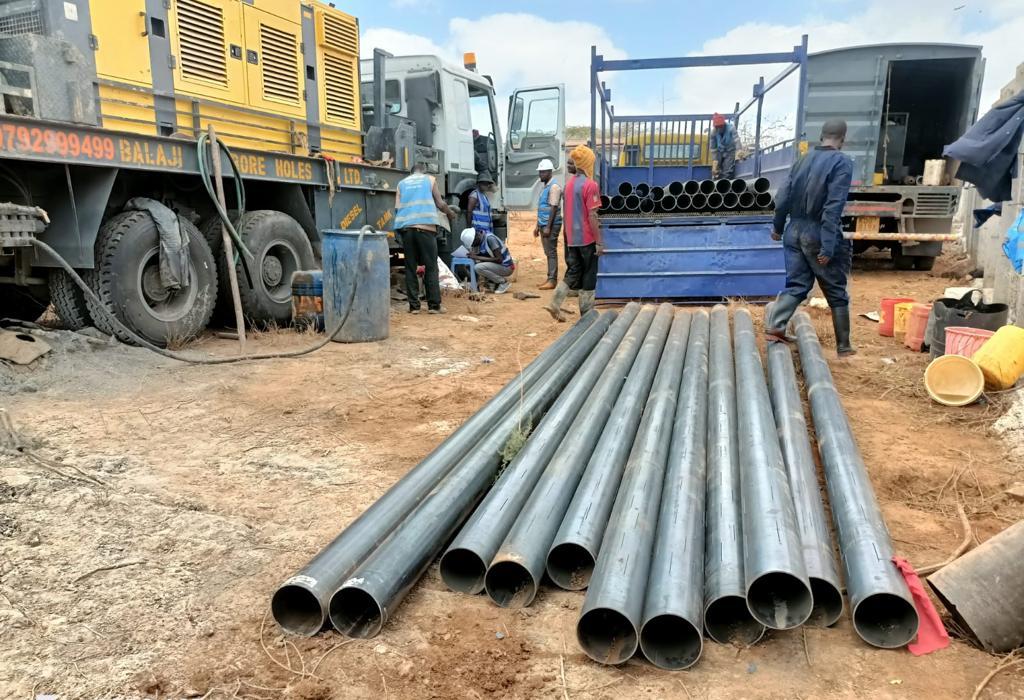
Casing is installed to help maintain borehole stability and protect the borehole from collapsing.
Depending on the borehole design and geological conditions, casing may include:
Plain casing
Screen casing
Different casing diameters
Casing suitable for the intended pumping system
Screen sections are positioned according to the geological formations and groundwater-bearing zones identified during drilling.
Correct casing installation is important because a poorly designed borehole may experience sediment entry, instability, reduced performance or premature damage to pumping equipment.
5. Borehole Development
After drilling and casing installation, borehole development is an important stage of the project.
Development helps remove drilling debris, fine particles and accumulated sediments from the borehole.
The process may involve specialised techniques depending on the borehole construction and geological conditions.
Proper development helps improve the clarity of water and can support better borehole performance.
A borehole should not simply be drilled and immediately treated as ready for permanent use without the appropriate completion procedures.
6. Borehole Pumping Tests
A pumping test helps establish how a borehole performs under pumping conditions.
The test can help determine:
Pumping water levels
Drawdown
Recovery after pumping
Borehole performance
Sustainable pumping considerations
Appropriate pump selection
Recommended pumping rates
This information is important when designing a water supply system for a home, farm, business, institution or community.
The pump should be selected according to the borehole’s tested performance rather than simply choosing the largest available pump.
7. Submersible Pump Installation
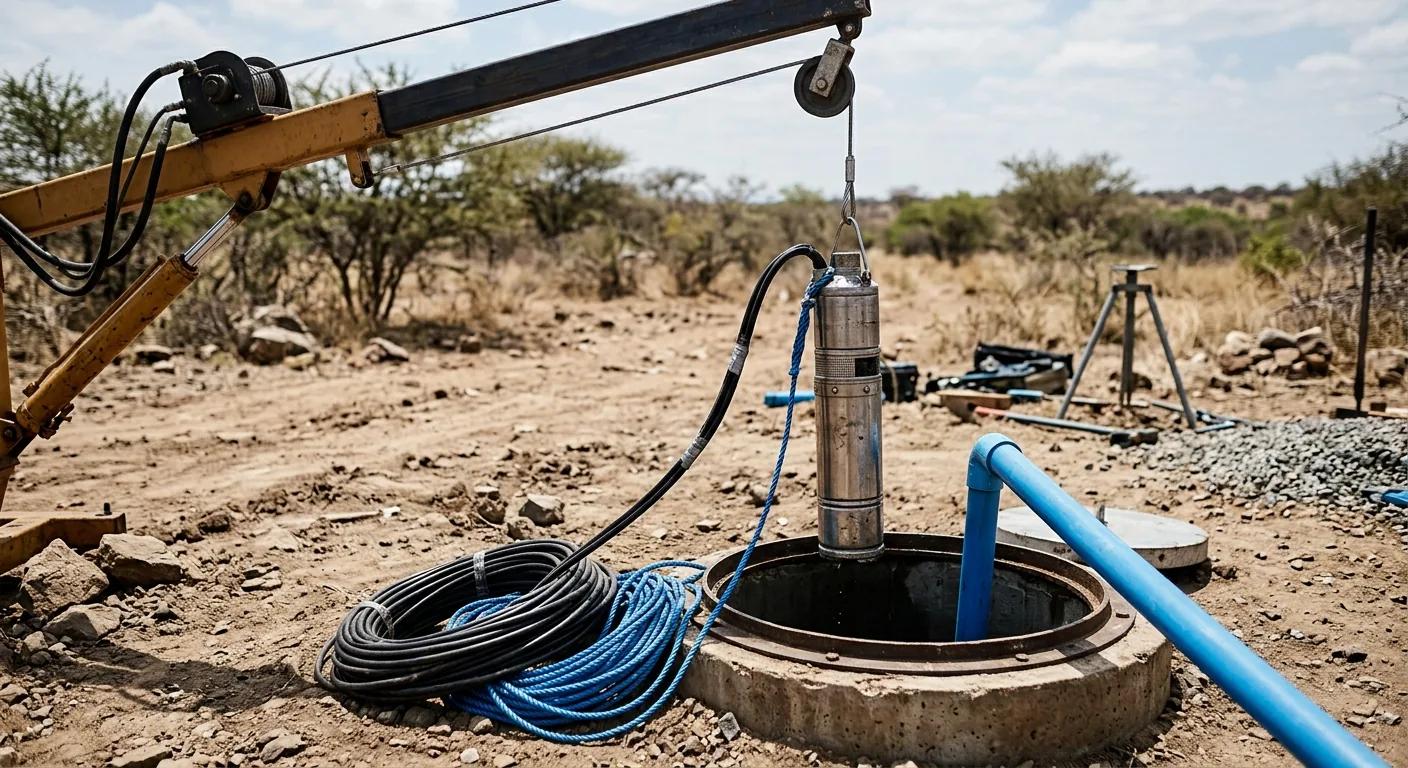
After drilling and testing, the borehole may require a suitable submersible pump.
Pump selection depends on several factors, including:
Borehole depth
Water level
Pumping rate
Total pumping head
Elevation difference
Distance to the storage tank
Pipe diameter
Water demand
Electrical availability
We assist clients with borehole pump installation and water lifting systems suitable for their requirements.
8. Solar Borehole Pumping Systems
Solar-powered borehole systems are increasingly attractive for properties that require reliable water supply without depending entirely on electricity.
Solar pumping can be useful for:
Farms
Rural homes
Schools
Livestock projects
Community water projects
Irrigation
Remote properties
Areas with unreliable electricity
A solar borehole system may include:
Solar panels
Solar pump controller
Submersible pump
Pump cables
Pipes
Storage tanks
Tank level controls
Supporting electrical components
Solar pumping systems must be designed according to the borehole performance, water requirements and pumping head.
Borehole Drilling in Homa Bay Town
Homa Bay Town serves as an important commercial, administrative and residential centre within the county. Water requirements in the town continue to arise from residential buildings, businesses, institutions, hotels, rental properties and commercial developments.
Borehole drilling may be considered for:
Private homes
Residential estates
Apartment buildings
Rental properties
Hotels
Restaurants
Commercial buildings
Schools
Churches
Healthcare facilities
Construction projects
Property owners looking for borehole drilling in Homa Bay Town should begin with an assessment of the proposed site, geological conditions and water demand.
A borehole intended for a single residential property may have different requirements from one designed to supply an apartment complex, hotel or commercial development.
Borehole Drilling in Mbita and Suba
Areas around Mbita and the wider Suba region have unique geographical conditions associated with Lake Victoria, islands, peninsulas, hills, settlements and rural communities.
Water projects in these areas may serve:
Homes
Fishing communities
Farms
Schools
Hotels
Tourist accommodation
Community projects
Commercial establishments
Livestock
The presence of Lake Victoria does not necessarily eliminate the need for boreholes. Many properties require convenient groundwater supplies for daily operations.
Groundwater investigations should take into consideration the local geological conditions and potential water-quality challenges.
Properties near the lake may also require particular attention to groundwater quality, sanitation and protection against contamination.
Borehole Drilling in Ndhiwa
Ndhiwa is an important agricultural and residential area within Homa Bay County.
Borehole water can support:
Domestic water supply
Crop production
Livestock
Irrigation
Greenhouses
Schools
Churches
Rural commercial developments
Community water projects
Agricultural boreholes may require higher water demand than residential boreholes.
Before drilling an agricultural borehole, it is important to establish the intended irrigation requirements, crop types, acreage, irrigation method and water storage arrangements.
A borehole intended for drip irrigation may have different requirements from one supporting livestock watering or extensive crop irrigation.
Borehole Drilling in Rachuonyo North
Rachuonyo North contains residential settlements, agricultural areas, trading centres and communities requiring reliable water supplies.
Borehole projects in this area may serve:
Residential homes
Small-scale farms
Livestock projects
Schools
Churches
Community facilities
Rural businesses
Irrigation systems
Groundwater investigations should consider the local terrain, geological formations, existing boreholes and water demand.
Borehole Drilling in Rachuonyo South
Rachuonyo South includes areas with agricultural activity, settlements and growing water requirements.
Borehole drilling can support:
Domestic water supply
Agricultural production
Irrigation
Livestock watering
Greenhouses
Commercial premises
Institutions
Community water projects
For farms, borehole planning should include a realistic assessment of water requirements throughout the year.
Borehole Drilling in Rachuonyo East
Rachuonyo East is another area where property owners, farmers and institutions may consider groundwater development.
Our services in the area include:
Groundwater surveys
Geophysical investigations
Borehole drilling
Borehole casing
Pump installation
Solar water pumping
Water storage
Water testing
Borehole maintenance
The proposed borehole location should be assessed independently because groundwater conditions can differ significantly between nearby properties.
Borehole Drilling in Rangwe
Rangwe is an important agricultural and residential area within Homa Bay County.
Water may be required for homes, farms, institutions, livestock, commercial properties and developing settlements.
Borehole drilling services in Rangwe can help property owners develop independent water sources for:
Residential use
Irrigation
Livestock
Agricultural processing
Schools
Healthcare facilities
Businesses
Churches
Community projects
A properly designed water system may incorporate a borehole, pump, storage tank, distribution pipeline and treatment system where necessary.
Borehole Drilling in Kabondo Kasipul
Kabondo Kasipul has residential settlements, agricultural properties, institutions and trading centres with varying water requirements.
Boreholes can be considered for:
Family homes
Rural estates
Farms
Commercial premises
Schools
Churches
Hospitals
Livestock projects
Community water schemes
Before drilling, the client should establish whether the proposed borehole is intended for domestic use, irrigation, livestock or multiple purposes.
This helps determine the expected water demand and the appropriate borehole and pumping system design.
Borehole Drilling in Kasipul
We also provide borehole drilling and groundwater development services in Kasipul and surrounding areas.
Services include:
Hydrogeological surveys
Geophysical surveys
Borehole drilling
Borehole completion
Casing installation
Pumping tests
Submersible pump installation
Solar pumping
Water storage
Water quality testing
Borehole rehabilitation
A reliable borehole installation should consider both groundwater availability and the long-term water supply requirements of the property.
Borehole Drilling in Suba North
Suba North includes areas with distinctive lake-region geography and rural settlements.
Groundwater projects in this area may serve:
Homes
Farms
Livestock
Fishing communities
Schools
Community water projects
Commercial developments
Tourism-related establishments
Groundwater assessment is important because the presence of surface water nearby does not automatically determine the quality or availability of groundwater at a specific borehole location.
Properties in lake-adjacent environments should also consider appropriate water-quality testing.
Borehole Drilling in Suba South
Suba South includes locations with rural settlements, islands, agricultural land, livestock activities and water-dependent businesses.
Our borehole drilling services can support:
Residential water supply
Community water systems
Agricultural irrigation
Livestock watering
Hotels and tourism facilities
Schools
Churches
Commercial projects
In locations where transport and mobilisation may be more challenging, project planning should include access arrangements, equipment mobilisation and logistics.
Groundwater Potential and Geological Conditions in Homa Bay County
Homa Bay County’s groundwater conditions are influenced by its geological formations, topography, rainfall patterns, lake environment, river systems and the distribution of weathered and fractured rocks.
The county includes areas around Lake Victoria, inland hills, valleys, plains, agricultural landscapes and islands. These geographical differences mean that groundwater availability can vary from one location to another.
Some boreholes may encounter groundwater in weathered formations, fractured bedrock or other groundwater-bearing structures. In other locations, drilling may encounter less favourable formations or water-quality challenges.
Factors influencing borehole water availability
The following factors can influence the success and performance of a borehole:
1. Geological formations
The underlying geological formation determines how water can accumulate and move underground.
2. Fractures and geological structures
In some hard-rock environments, groundwater may be associated with fractures and weathered zones.
3. Topography
Hills, valleys, slopes and low-lying areas can influence groundwater movement and recharge.
4. Rainfall and recharge
Rainfall contributes to groundwater recharge, but recharge rates vary according to soils, vegetation, geology, land use and drainage.
5. Local groundwater abstraction
Existing boreholes and water extraction within an area may affect groundwater levels and the performance of new boreholes.
6. Water quality
Groundwater may contain naturally occurring minerals or be affected by sanitation, agricultural activities, surface runoff and other contamination sources.
7. Borehole construction
The quality of drilling, casing, screening, development and pump installation can affect the performance and durability of a borehole.
Why a survey is important
A neighbouring borehole does not guarantee that another borehole on your property will have the same depth, yield or water quality.
For this reason, GossTech Kenya Technologies recommends a site-specific groundwater assessment before drilling.
Hydrogeological and geophysical investigations can help identify potential drilling targets and support informed project planning.
Residential Borehole Drilling in Homa Bay County
Homeowners throughout Homa Bay County may consider borehole drilling as a way of improving water independence.
Residential boreholes can serve:
Private homes
Bungalows
Maisonettes
Apartments
Rental properties
Residential estates
Rural homes
Holiday homes
Property developments
A domestic borehole system may include:
Groundwater survey
Drilling
Borehole casing
Borehole development
Pumping test
Water quality testing
Submersible pump installation
Water storage tank
Distribution piping
Water treatment where necessary
The design should match the number of occupants and the household’s water consumption.
A small household may require a different pumping arrangement from a large apartment building or residential estate.
Borehole Drilling for Agriculture in Homa Bay County
Agriculture is an important economic activity in Homa Bay County. Reliable water can support farming activities, particularly where rainfall is insufficient, irregular or unsuitable for maintaining production throughout the year.
Agricultural boreholes may be used for:
Crop irrigation
Vegetable farming
Fruit production
Greenhouse farming
Nursery operations
Livestock
Dairy farming
Poultry
Fish-related agricultural activities
Agricultural processing
Boreholes for irrigation
Irrigation projects require careful water planning.
Before drilling, farmers should consider:
Farm size
Crops being cultivated
Water demand
Irrigation method
Daily irrigation schedule
Seasonal demand
Water storage
Pumping capacity
Distribution infrastructure
The water demand of a large irrigation project may be considerably higher than that of a domestic borehole.
The borehole’s tested performance must therefore be considered before designing the irrigation system.
Boreholes for greenhouse farming
Greenhouse farming requires consistent water availability.
Borehole water can be used for:
Drip irrigation
Fertigation
Nursery watering
Vegetable production
Seedling production
A greenhouse borehole project may incorporate a storage tank, filtration system, pressure pump, irrigation controls and drip lines.
Borehole Drilling for Livestock in Homa Bay County
Livestock keeping creates an ongoing demand for water.
Borehole water may support:
Cattle
Dairy cows
Goats
Sheep
Poultry
Pigs
Other livestock
A livestock borehole should be designed around the number of animals, water consumption, seasonal conditions and the availability of storage.
Storage tanks can help provide water during periods when pumping is not taking place.
Commercial Borehole Drilling
Businesses require dependable water for daily operations.
GossTech Kenya Technologies provides borehole drilling solutions for commercial properties such as:
Hotels
Restaurants
Lodges
Guest houses
Rental properties
Shopping centres
Offices
Factories
Workshops
Car washes
Construction sites
Commercial farms
Processing facilities
Commercial borehole systems should be designed according to the operational water demand of the business.
For example, a hotel may require water for guest rooms, kitchens, laundry, swimming pools, landscaping and cleaning.
A car wash may require a different water system from an office building or manufacturing facility.
Boreholes for Schools, Churches and Institutions
Institutions often require significant quantities of water for daily operations.
We provide borehole drilling solutions for:
Primary schools
Secondary schools
Colleges
Universities
Churches
Mosques
Hospitals
Clinics
Children’s homes
Training centres
Community institutions
Institutional boreholes may support:
Drinking water
Cooking
Toilets
Handwashing
Cleaning
Laundry
Gardens
Staff accommodation
Student accommodation
Water storage is particularly important for institutions because water consumption can fluctuate significantly throughout the day.
A properly designed system may include a borehole, pump, storage tanks, elevated tank structure, distribution piping and treatment equipment.
Areas We Serve Across Homa Bay County
GossTech Kenya Technologies provides borehole drilling services across the county’s major towns, sub-counties, wards, rural settlements, trading centres, farms and residential areas.
Homa Bay County has eight administrative sub-counties and 40 wards. The county’s administrative structure includes Homa Bay Town, Ndhiwa, Rachuonyo East, Rachuonyo North, Rachuonyo South, Rangwe, Suba North and Suba South.
homabay.go.ke+1
Homa Bay Town and surrounding areas
We serve:
Homa Bay Town
Homa Bay Central
Homa Bay East
Homa Bay West
Homa Bay Arujo
Kanyada
Kanyabala
Katuma
Gogo
Riat
West Kanyada
Other surrounding residential and rural areas
Ndhiwa areas
Our services extend to:
Ndhiwa Town
Kanyamwa
Kanyamwa Kosewe
Kanyamwa Kalogi
Kanyikela
Kabuoch
Kabuoch North
Kabuoch South
Kanyadoto
Kojwach
Kochia
Kwabwai
Lambwe
Nearby villages and settlements
Rangwe areas
We provide services in:
Rangwe
Kagan
Kochia
Gem areas
East Gem
West Gem
Surrounding villages
Rural farms and residential properties
Rachuonyo North
Coverage includes:
Rachuonyo North
Karachuonyo
North Karuochonyo
West Karachuonyo
Central Karachuonyo
Wangchieng’
Nearby villages and trading centres
Rachuonyo South
We serve:
Rachuonyo South
Kendu Bay
Kendu Bay Town
Kanyaluo
Kanyadoto
Nearby residential areas
Rural agricultural properties
Rachuonyo East
Service areas include:
Rachuonyo East
Kabondo
Kabondo East
Kabondo West
Kojwach
Kokwanyo/Kakelo
Nearby settlements and villages
Kasipul
We provide borehole services in:
Kasipul
Central Kasipul
South Kasipul
West Kasipul
East Kamagak
West Kamagak
Oyugis and surrounding areas
Rural settlements and farms
Suba North
Coverage includes:
Suba North
Gwassi
Gwassi North
Gwassi South
Gembe
Nearby mainland settlements
Rural farms and properties
Suba South
We provide borehole services in:
Suba South
Mbita
Kasgunga
Kaksingri
Kaksingri West
Ruma Kaksingri
Mfangano Island
Rusinga Island
Nearby settlements and communities
The county’s official administrative listings identify these areas and wards as part of Homa Bay County’s administrative structure.
homabay.go.ke+2
Borehole Drilling on Rusinga Island
Rusinga Island has residential settlements, fishing communities, tourism-related establishments, farms and community projects that may require reliable water supplies.
Borehole drilling projects on the island should consider:
Geological conditions
Site accessibility
Equipment mobilisation
Water demand
Groundwater quality
Pumping requirements
Storage requirements
Environmental protection
Potential applications include residential water supply, accommodation facilities, schools, community projects, commercial establishments and agricultural activities.
Because island projects may have additional logistical considerations, proper planning before mobilisation is particularly important.
Borehole Drilling on Mfangano Island
Mfangano Island also presents unique water supply requirements for homes, businesses, institutions and communities.
Borehole projects may serve:
Residential properties
Community water systems
Schools
Healthcare facilities
Tourism businesses
Livestock
Agricultural activities
Commercial properties
Site assessment and mobilisation planning should be carried out before drilling equipment is transported to the project location.
Water quality should also be assessed before the water is used for drinking or other sensitive applications.
Our Borehole Drilling Process
We follow a structured process to help clients plan and develop borehole water systems.
Step 1: Understanding Your Water Requirements
We begin by understanding the intended purpose of the borehole.
We assess whether the water will be used for:
Domestic consumption
Irrigation
Livestock
Commercial operations
Institutional use
Community supply
Multiple applications
The anticipated water demand influences the borehole design and pumping system.
Step 2: Site Assessment
The proposed drilling location is assessed for accessibility, terrain, surrounding infrastructure and possible environmental concerns.
The site assessment helps identify practical considerations before drilling equipment is mobilised.
Step 3: Hydrogeological and Geophysical Investigations
Groundwater investigations help assess underground conditions and identify possible drilling targets.
These investigations may help identify geological formations and structures that could support groundwater occurrence.
The results inform the drilling plan, although they cannot guarantee the presence or quantity of groundwater.
Step 4: Project Planning and Approvals
Before drilling begins, the project should be planned according to applicable regulatory requirements.
Planning may include:
Survey reports
Relevant approvals
Site preparation
Equipment mobilisation
Access arrangements
Borehole design
Budget planning
Step 5: Borehole Drilling
The drilling team mobilises equipment to the site and begins drilling according to the selected drilling method and geological conditions.
Drilling progresses through the formations encountered underground.
The actual depth is determined by geological conditions, groundwater occurrence and the technical requirements of the borehole.
Step 6: Borehole Casing
Casing is installed to support borehole stability and protect the borehole.
The casing design is based on the borehole diameter, geology, depth and groundwater-bearing formations.
Step 7: Borehole Development
Development helps remove drilling-related particles and improve borehole performance.
This stage is important for reducing sediment and preparing the borehole for testing.
Step 8: Pumping Test
A pumping test evaluates borehole performance under controlled pumping conditions.
The results help establish the appropriate pumping rate and inform the pump selection.
Step 9: Water Quality Testing
Water samples are collected and tested to determine whether the water is suitable for its intended use.
Water treatment may be required depending on the test results.
Step 10: Pump Installation
A suitable submersible pump is installed according to the borehole’s tested performance.
The system may incorporate electrical or solar pumping.
Step 11: Storage and Distribution
Water is transferred to storage tanks and distributed to the property.
The storage system may include:
Ground tanks
Elevated tanks
Pumping controls
Distribution pipes
Valves
Pressure systems
Step 12: Handover and Maintenance
After installation, the client should receive guidance on operating the system and maintaining the borehole and pumping equipment.
Regular maintenance can help reduce the risk of unexpected breakdowns.
Borehole Water Storage Solutions in Homa Bay
A borehole is only one component of a complete water supply system.
Storage helps ensure water is available when demand is high or when the pump is not running.
Water storage solutions may include:
1,000-litre tanks
2,000-litre tanks
5,000-litre tanks
10,000-litre tanks
Larger storage tanks
Multiple interconnected tanks
Ground storage tanks
Elevated storage tanks
The appropriate tank capacity depends on daily water consumption, pumping capacity, supply interruptions and the intended use of the water.
For commercial properties, farms, schools and institutions, larger storage systems may be necessary.
Borehole Water Treatment in Homa Bay County
Not all groundwater is automatically suitable for drinking.
Water quality can vary depending on geological conditions, groundwater movement, land use, sanitation and other environmental factors.
A borehole water test can help identify issues such as:
Turbidity
Excess iron
Manganese
Hardness
Salinity
Unusual taste or odour
Bacterial contamination
Other chemical or physical characteristics
Depending on the results, treatment options may include:
Sediment filtration
Iron removal
Manganese removal
Water softening
Activated carbon filtration
Disinfection
UV treatment
Reverse osmosis for appropriate applications
Other specialised treatment systems
The correct treatment system should be selected based on laboratory results rather than assumptions.
Borehole Repair and Rehabilitation in Homa Bay County
Existing boreholes may experience problems over time.
GossTech Kenya Technologies can assist clients with borehole troubleshooting, repair planning and rehabilitation services.
Common borehole problems
Borehole producing less water
Pump failing to start
Pump running but delivering insufficient water
Excessive sand in water
Pump repeatedly tripping
Low water pressure
Electrical faults
Damaged pump cables
Pump failure
Borehole contamination concerns
Storage tank not filling
Solar pump failure
Borehole control panel problems
Borehole rehabilitation
Depending on the condition of the borehole, rehabilitation may involve:
Borehole inspection
Pump removal
Pump replacement
Borehole cleaning
Development
Sediment removal
Pumping system upgrades
Electrical repairs
Water-quality investigations
The appropriate repair depends on the actual cause of the problem.
Borehole Drilling Costs in Homa Bay County
The cost of drilling a borehole in Homa Bay County depends on the project requirements and conditions at the site.
There is no single fixed price applicable to every borehole.
Factors influencing cost include:
Drilling depth
Geological formations
Borehole diameter
Casing requirements
Site accessibility
Equipment mobilisation
Survey requirements
Pumping test
Water quality testing
Pump capacity
Solar system requirements
Storage tanks
Distribution piping
Water treatment
Indicative borehole project costs
The following figures are planning estimates and should not be treated as fixed quotations.
| Service or component | Indicative cost (KSh) |
|---|---|
| Hydrogeological survey | 40,000–100,000 |
| Geophysical survey | 35,000–100,000 |
| Permits and approvals | 30,000–150,000+ |
| Mobilisation | 50,000–200,000+ |
| Drilling per metre | 6,000–12,000+ |
| Plain casing per metre | 2,500–6,000+ |
| Screen casing per metre | 3,000–7,000+ |
| Gravel pack | 20,000–100,000+ |
| Borehole development | 30,000–100,000+ |
| Pumping test | 30,000–100,000+ |
| Water quality testing | 15,000–50,000+ |
| Submersible pump | 50,000–300,000+ |
| Pump installation | 30,000–100,000+ |
| Electrical installation | 30,000–150,000+ |
| Solar pumping system | 150,000–800,000+ |
| Water storage tanks | 20,000–300,000+ |
| Tank structure | 50,000–500,000+ |
Estimated complete project budgets
| Project type | Estimated budget |
|---|---|
| Basic residential borehole project | KSh 1.2M–2.0M+ |
| Residential borehole with storage | KSh 1.5M–2.8M+ |
| Residential borehole with solar | KSh 2.0M–4.5M+ |
| Commercial or institutional project | KSh 2.5M–4.5M+ |
| Agricultural or community borehole | Depends on project requirements |
These estimates can change depending on drilling depth, geology, water yield, equipment specifications, project location and transportation requirements.
For remote areas, islands and locations with difficult access, mobilisation and logistical costs may be higher.
A proper quotation should be prepared after evaluating the site and determining the scope of work.
Borehole Permits and Regulatory Requirements
Borehole drilling in Kenya is subject to applicable water-resource regulations and approval requirements.
Depending on the project, clients may need to consider:
Groundwater assessment reports
Hydrogeological reports
Required authorisations
Drilling documentation
Borehole completion records
Pumping test documentation
Water quality reports
Water-resource approvals
Environmental considerations
The requirements applicable to a specific project should be confirmed with the relevant authorities before drilling.
GossTech Kenya Technologies can help clients understand the planning and documentation requirements associated with their borehole projects.
Why Choose GossTech Kenya Technologies for Borehole Drilling?
Choosing the right borehole contractor is important because drilling represents a significant investment.
At GossTech Kenya Technologies, we aim to provide comprehensive borehole solutions rather than simply drilling a hole and leaving the client to organise the remaining components.
Our services include:
Groundwater assessment
Hydrogeological surveys
Geophysical surveys
Borehole drilling
Borehole casing
Borehole development
Pumping tests
Water quality testing
Submersible pump installation
Solar pumping systems
Water storage
Water distribution
Water treatment
Borehole repair
Borehole rehabilitation
Maintenance services
We support residential clients, farmers, commercial property owners, institutions and community water projects.
Our approach is to assess each project according to its location, requirements, budget and intended use.
We serve Homa Bay County, Nairobi and Across Kenya.
Frequently Asked Questions About Borehole Drilling in Homa Bay County
1. How much does it cost to drill a borehole in Homa Bay?
The cost depends on drilling depth, geological conditions, casing, mobilisation, pump installation, storage and other requirements. A complete residential project may cost approximately KSh 1.2 million to KSh 2 million or more, depending on the specifications.
2. Is groundwater available throughout Homa Bay County?
Groundwater occurs in different parts of the county, but its availability, depth, yield and quality vary from location to location. A site-specific groundwater assessment is recommended before drilling.
3. Do I need a hydrogeological survey before drilling?
A hydrogeological assessment is an important part of borehole planning. It helps evaluate the proposed site and groundwater conditions and supports informed drilling decisions.
4. Can you drill boreholes in Mbita and the islands?
Yes. We provide borehole drilling services in Mbita, Suba, Rusinga Island, Mfangano Island and other areas, subject to site accessibility and project logistics.
5. Can a borehole supply water for irrigation?
Yes. Boreholes can be designed for irrigation, but the borehole’s tested yield must be considered alongside the size of the farm, crop requirements and irrigation system.
6. Can you install solar borehole pumps?
Yes. We provide solar borehole pumping solutions that can include solar panels, controllers, submersible pumps, piping and water storage systems.
7. Is borehole water safe for drinking?
Not automatically. Borehole water should be tested before being used for drinking. Treatment may be required depending on the water quality results.
8. Can you repair an existing borehole?
Yes. We offer borehole troubleshooting, pump replacement, rehabilitation, maintenance and water-system repair services.
9. Do you drill boreholes for schools and hospitals?
Yes. We provide borehole solutions for schools, hospitals, churches, institutions, community projects, commercial developments and residential properties.
10. How long does borehole drilling take?
The duration depends on drilling depth, geological conditions, equipment, site accessibility and the additional work required for casing, development, testing and installation.
11. Do you serve rural areas and villages?
Yes. We provide borehole drilling services in towns, rural settlements, farms, villages, estates and other locations throughout Homa Bay County, subject to site access and mobilisation arrangements.
12. Do you provide borehole services outside Homa Bay?
Yes. Our service coverage is Nairobi and Across Kenya.
Contact GossTech Kenya Technologies for Borehole Drilling in Homa Bay
Are you planning to drill a borehole in Homa Bay Town, Ndhiwa, Rangwe, Kendu Bay, Oyugis, Mbita, Suba, Rachuonyo, Kabondo Kasipul, Kasipul, Rusinga Island, Mfangano Island or another location within Homa Bay County?
Contact GossTech Kenya Technologies for professional borehole drilling, groundwater surveys, pump installation, solar pumping, water storage, water testing, treatment and borehole maintenance.
GossTech Kenya Technologies
📞 Phone: 0723613664
📧 Email: info@gosstech.co.ke
🌍 Website: www.gosstech.co.ke
Borehole Drilling Services in Homa Bay County, Nairobi and Across Kenya.
We help homeowners, farmers, institutions, businesses and communities plan dependable water supply solutions.