
Borehole Drilling in Uasin Gishu County | GossTech Kenya Technologies
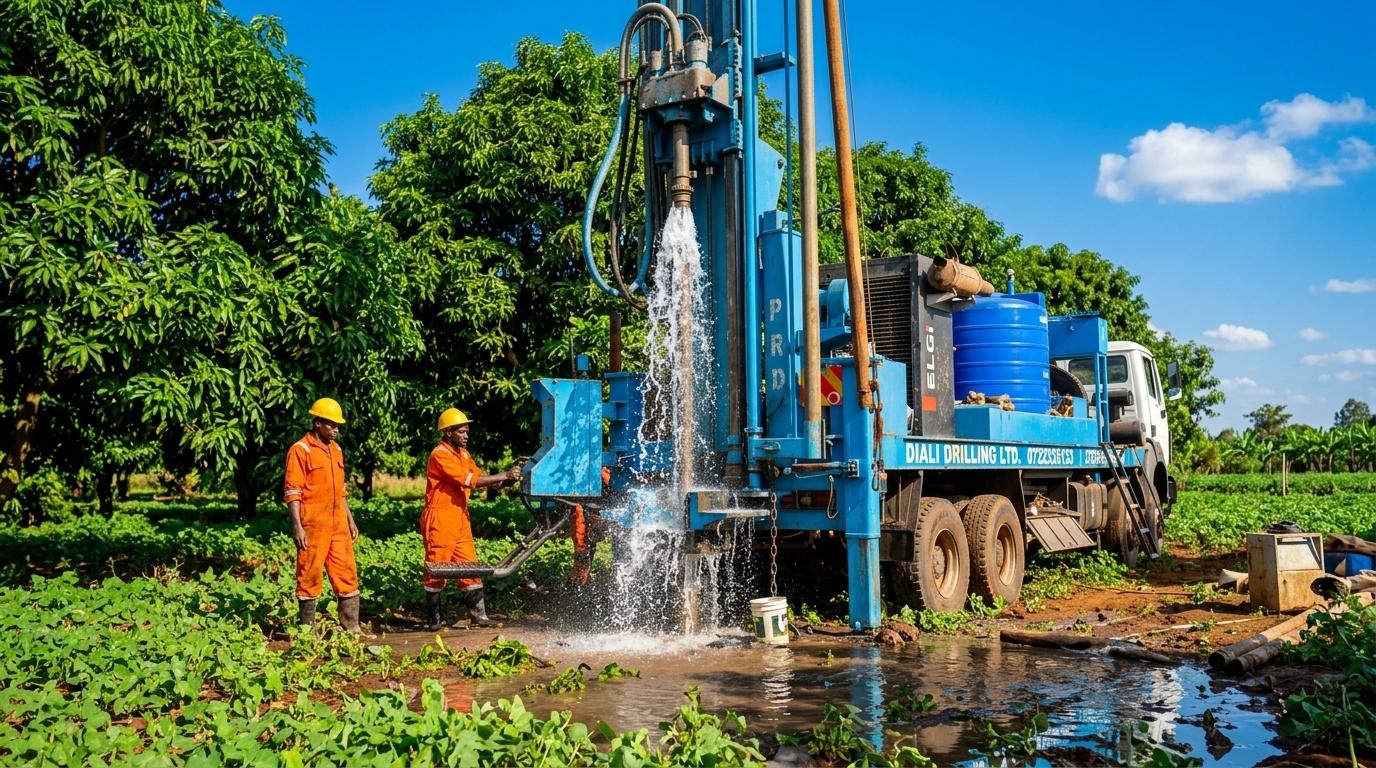
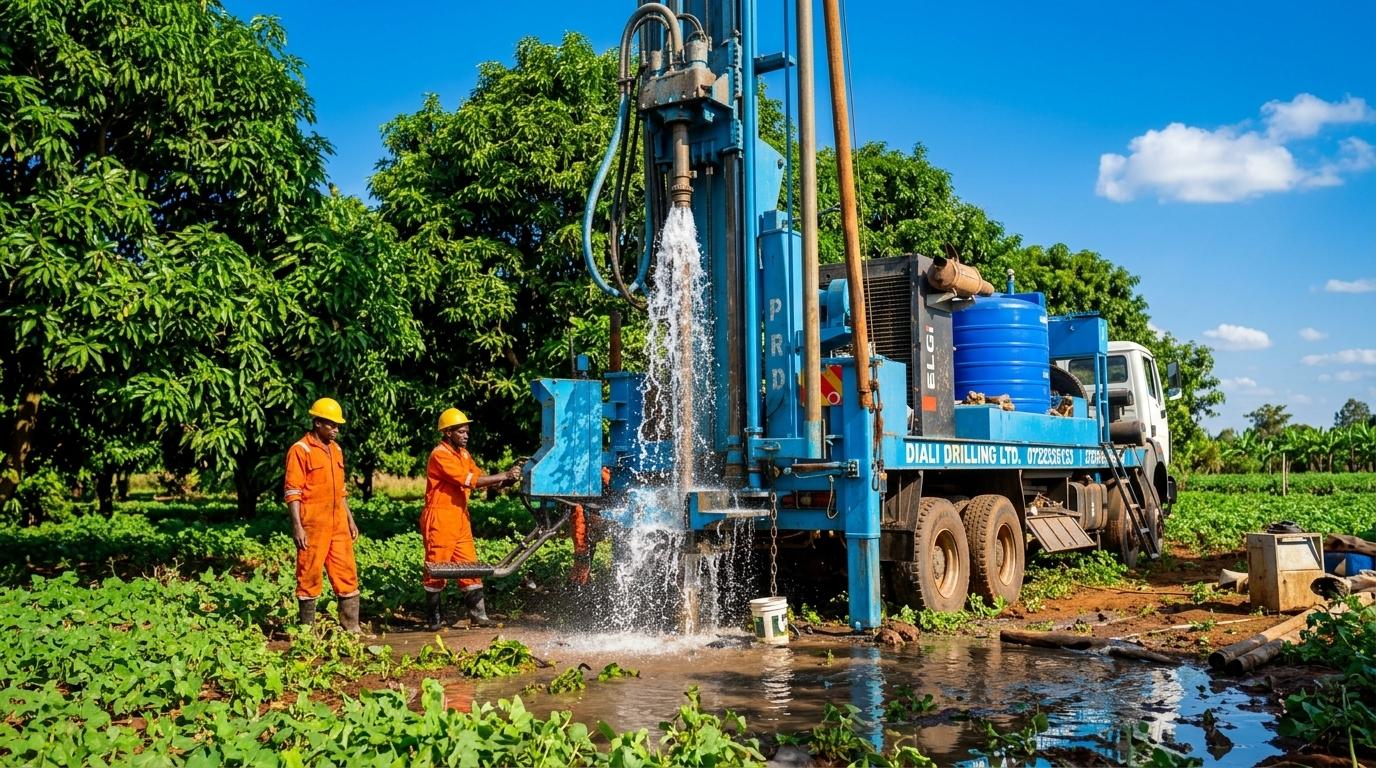
Description: Looking for professional borehole drilling in Uasin Gishu County? GossTech Kenya Technologies offers hydrogeological surveys, geophysical surveys, borehole drilling, pump installation, solar water systems, water storage, testing and treatment in Eldoret and across Uasin Gishu County.
Professional Borehole Drilling Services in Uasin Gishu County
Reliable water supply is essential for homes, farms, businesses, institutions, livestock operations, manufacturing facilities, residential developments and communities. In Uasin Gishu County, where agriculture, urban expansion, commercial activities and population growth continue to increase water demand, investing in a dependable water source can provide long-term benefits.
GossTech Kenya Technologies provides borehole drilling services in Uasin Gishu County, including hydrogeological surveys, geophysical surveys, borehole drilling, casing installation, borehole development, pumping tests, submersible pump installation, solar pumping systems, water storage, water testing, treatment and borehole maintenance.
Whether you are planning to drill a borehole for a home in Eldoret, a farm in Moiben, a commercial property in Turbo, an institution in Kesses, a livestock farm in Soy or a development project in Ainabkoi, professional planning is essential before drilling begins.
Our services are available throughout Uasin Gishu County, Nairobi and Across Kenya.
Why Borehole Drilling Is Important in Uasin Gishu County
Uasin Gishu is one of Kenya’s important agricultural and commercial counties. Eldoret serves as a major urban, commercial, educational, medical and transport centre, while surrounding areas contain extensive agricultural land, rural settlements, institutions, residential developments and livestock farms.
Water requirements differ significantly from one property to another.
A residential household may require water for:
Drinking and cooking
Showering and bathing
Laundry
Cleaning
Toilets
Gardening
Landscaping
Swimming pools
Domestic water storage
A commercial property may need water for:
Hotels and accommodation facilities
Restaurants
Offices
Shopping centres
Apartments
Rental properties
Car washes
Industrial operations
Construction projects
Agricultural properties may require water for:
Irrigation
Greenhouses
Dairy farming
Livestock drinking water
Poultry production
Crop production
Horticulture
Agricultural processing
A properly investigated and professionally constructed borehole can help property owners reduce dependence on unreliable water supply systems, especially where water demand is high or where piped water is unavailable.
However, borehole success depends on geological conditions, groundwater availability, proper site selection, drilling methods, construction standards and responsible water management.
1. Borehole Drilling in Eldoret and Surrounding Areas
Eldoret is the main urban centre in Uasin Gishu County and has a growing demand for dependable water supply from households, apartment developments, commercial buildings, institutions, industries and property developers.
GossTech Kenya Technologies provides borehole drilling solutions in areas including:
Eldoret CBD
West Indies
Elgon View
Kapsoya
Pioneer
Langas
Huruma
Kimumu
Annex
Racecourse
Chepkoilel
Ngeria
Kipkenyo
Kesses Road
Iten Road
Uganda Road
Kisumu Road
Nairobi Road
Sosiani
Munyaka
Kamukunji
Maili Nne
Kipkaren
Plateau
Yamumbi
Rupa area
Eldoret outskirts
New residential developments around Eldoret
The growing number of residential estates, apartments, commercial developments and agricultural properties creates opportunities for property owners to invest in alternative and supplementary water supplies.
Borehole drilling projects in urban and peri-urban areas require careful site selection because neighbouring boreholes, existing infrastructure, property boundaries, underground utilities, access roads and geological conditions may influence the drilling plan.
2. Borehole Drilling Services Across Uasin Gishu County
Uasin Gishu County has six sub-counties and 30 electoral wards. Our borehole services extend across the county’s urban, rural, agricultural and developing areas.
The county’s administrative structure includes Soy, Turbo, Moiben, Ainabkoi, Kapseret and Kesses.
Maarifa Centre+1
Soy Sub-County Borehole Drilling
Soy Sub-County contains agricultural areas, rural settlements, trading centres, institutions and growing residential developments.
We offer borehole drilling services in:
Soy
Moi’s Bridge
Ziwa
Kipsomba
Kuinet
Kapsuswa
Segero
Barsombe
Kapkures
Kiplombe vicinity
Chepkemel
Sirikwa
Soy town surroundings
Agricultural settlements throughout Soy
Soy Sub-County wards
Kuinet/Kapsuswa
Kapkures
Ziwa
Segero/Barsombe
Kipsomba
Soy
Moi’s Bridge
Whether you own a farm, residential property, school, livestock facility, commercial premises or community project in Soy, GossTech Kenya Technologies can help assess the feasibility of borehole development.
Boreholes may be particularly useful for farms requiring supplementary water for irrigation, livestock, domestic consumption and agricultural operations.
Turbo Sub-County Borehole Drilling
Turbo is an important area for agriculture, rural settlements, commercial activity and expanding residential communities.
Our services cover:
Turbo town
Kamagut
Kapsaos
Kiplombe
Huruma
Ngenyilel
Tapsagoi
Chepkanga
Kipkaren
Sugoi
Sinoko
Farm settlements
Rural residential properties
Commercial developments
Turbo wards
Ngenyilel
Tapsagoi
Kiplombe
Kapsaos
Huruma
Kamagut
Properties in Turbo may require boreholes for domestic water, livestock, crop irrigation, schools, institutions and agricultural processing.
Moiben Sub-County Borehole Drilling
Moiben contains agricultural communities, farms, settlements and water projects supporting domestic and productive uses.
We serve:
Moiben town
Sergoit
Kimumu
Tembelio
Karuna
Meibeki
Kapsoya vicinity
Cheptebo
Kimuchi
Kapsaos vicinity
Kapnyangi
Soin
Seiyot
Lelit
Kapchunga
Kambi Tatu
Kambi Simba
Farm settlements
Rural communities throughout Moiben
Moiben wards
Tembelio
Kimumu
Karuna/Meibeki
Moiben
Sergoit
Moiben has agricultural land where boreholes may support dairy farming, horticulture, irrigation, livestock watering and domestic water requirements.
The county has documented borehole and water projects in locations including Karuna/Meibeki, Sergoit and surrounding areas, demonstrating the role of groundwater infrastructure in local water supply development.
County Government of Uasin Gishu+1
Ainabkoi Sub-County Borehole Drilling
Ainabkoi is characterised by farms, rural settlements, trading centres, institutions and properties requiring water for residential and agricultural use.
Our services cover:
Ainabkoi
Olare
Kaptagat
Burnt Forest
Kipkabus
Nairiri
Tulwet
Ngara
Mimosa
Baraka
Chepkongony
Farm settlements
Residential developments
Institutions and commercial properties
Ainabkoi wards
Kapsoya
Ainabkoi/Olare
Kaptagat
Borehole water can support farms, dairy operations, horticultural projects, households, schools, institutions and commercial properties.
Before drilling, a hydrogeological assessment is important because groundwater conditions may differ considerably between individual sites.
Kapseret Sub-County Borehole Drilling
Kapseret has experienced substantial residential, commercial and urban development, especially around Eldoret and its expanding outskirts.
We provide borehole drilling services in:
Kapseret
Langas
Ngeria
Megun
Kipkenyo
Simat
Kapsaret
Chebarus
Ng’eny
Kipsamoo
Kipkaren
Ngeria Road
Eldoret-Nairobi Road corridor
Residential estates
Commercial developments
Agricultural properties
Kapseret wards
Simat/Kapseret
Langas
Ngeria
Megun
Kipkenyo
Boreholes in Kapseret may serve private homes, apartments, rental properties, schools, hotels, businesses, construction developments and farms.
Kesses Sub-County Borehole Drilling
Kesses is an important agricultural and educational area, with rural settlements, farms, institutions and growing developments.
We provide services in:
Kesses
Tarakwa
Cheptiret
Kipchamo
Tulwet
Chuiyat
Racecourse
Nabkoi
Cheboror
Chebii
Chereber
Kiting’ei
Burnt Forest surroundings
Agricultural settlements
Rural homes
Institutional properties
Kesses wards
Tarakwa
Cheptiret/Kipchamo
Tulwet/Chuiyat
Racecourse
Water projects in Kesses have included borehole equipping, storage tanks, solar pumping and distribution infrastructure, reflecting the importance of groundwater development in supporting local communities.
County Government of Uasin Gishu+1
3. Groundwater Conditions in Uasin Gishu County
One of the most important aspects of borehole drilling is understanding the geological and groundwater conditions of the proposed drilling location.
Uasin Gishu County has a varied landscape, with elevations generally decreasing from east to west. The county also has permanent rivers including Moiben, Little Nzoia, Sergoit, Elegarini, Sosiani and Kipkaren. The county’s water resources include rivers, springs, groundwater, dams and other sources.
Maarifa Centre+1
However, the presence of rivers, rainfall, fertile soils or nearby boreholes does not automatically establish the groundwater conditions of a specific property.
Groundwater factors affecting borehole drilling
Several factors influence borehole development:
Geological formations
Rock types
Weathering zones
Fractures and faults
Groundwater recharge
Elevation
Local drainage patterns
Nearby water bodies
Existing boreholes
Seasonal variations
Groundwater abstraction
Property location
Two properties situated relatively close to each other can experience different drilling conditions.
A neighbouring borehole may provide useful information during preliminary assessment, but its depth, yield and water quality should not be used as a guarantee for a new borehole.
Groundwater in agricultural areas
In agricultural parts of Uasin Gishu, groundwater development may support:
Dairy farming
Crop irrigation
Greenhouse farming
Poultry
Livestock watering
Farm households
Agricultural processing
Farm worker accommodation
Rural commercial activities
The correct borehole location should be determined through professional assessment rather than selecting a drilling point based only on convenience.
4. Hydrogeological Survey Before Borehole Drilling
Before drilling a borehole in Uasin Gishu County, a hydrogeological survey helps assess the suitability of a proposed site.
The survey involves studying the physical characteristics of the property and available geological and groundwater information.
What the survey investigates
The survey may consider:
Geological formations
Surface topography
Drainage patterns
Groundwater occurrence
Existing boreholes
Nearby wells
Water sources
Groundwater recharge areas
Potential groundwater contamination risks
Access for drilling machinery
Proposed borehole location
Estimated drilling conditions
The objective is to identify a scientifically informed drilling location with reasonable prospects of encountering groundwater.
Why surveys are important
A survey helps property owners avoid making drilling decisions based solely on guesswork.
It can help:
Identify suitable drilling locations
Reduce unnecessary drilling risks
Assess geological conditions
Estimate likely drilling requirements
Plan borehole construction
Guide the application and technical documentation process
A survey cannot guarantee that water will be encountered, nor can it guarantee a particular borehole yield.
5. Geophysical Survey and Groundwater Exploration
Geophysical surveys help investigate underground conditions before borehole drilling.
Depending on the site and geological setting, appropriate geophysical methods may be used to investigate subsurface formations and identify potential groundwater-bearing structures.
The purpose is to improve drilling-site selection by providing information that cannot be obtained through surface observation alone.
Geophysical investigations may assess:
Underground geological structures
Fractures and possible fault zones
Weathered rock formations
Variations in subsurface materials
Possible groundwater-bearing zones
Depth-related changes in formations
Potential drilling targets
Geophysical survey for residential boreholes
For residential developments in Eldoret, Kapseret, Kesses and surrounding areas, surveys can help identify a suitable drilling point while considering:
House foundations
Septic systems
Underground utilities
Property boundaries
Access roads
Existing boreholes
Water storage facilities
Future building plans
Geophysical survey for agricultural boreholes
For farms in Soy, Moiben, Turbo, Ainabkoi and Kesses, groundwater investigations may be used to assess suitable locations for boreholes intended to support agricultural operations.
The drilling location should also consider practical requirements such as pump installation, power supply, solar panels, water tanks and distribution pipelines.
6. Professional Borehole Drilling Process in Uasin Gishu
GossTech Kenya Technologies approaches borehole projects through a planned sequence of activities, from site assessment to commissioning.
Step 1: Site Inspection
The proposed property is inspected to understand the project requirements.
The inspection considers:
Property size
Access for drilling equipment
Proposed drilling location
Existing structures
Underground utilities
Septic systems
Drainage
Nearby boreholes
Intended water use
Available space for tanks
Pumping equipment location
For properties around Eldoret town, site access and space can be particularly important because drilling machinery requires sufficient working room.
For farms and rural properties, the assessment may include vehicle access, terrain, distances to water storage and proposed distribution points.
Step 2: Hydrogeological Assessment
A hydrogeological assessment is carried out to evaluate the proposed site.
This provides important information for the planning stage, including the area’s geological setting, potential groundwater occurrence and drilling considerations.
Step 3: Geophysical Survey
Where appropriate, geophysical investigations are undertaken to help identify suitable groundwater exploration targets.
The results help guide the selection of a proposed drilling point.
Step 4: Project Planning and Approvals
Before drilling begins, the necessary regulatory requirements should be established.
The project may involve:
Water resource permits
Borehole drilling authorization
Environmental requirements
Technical documentation
Landowner authorization
Relevant water resource management approvals
The exact requirements depend on the nature and location of the project and applicable regulations.
Step 5: Mobilisation of Drilling Equipment
Once the project is planned and approvals are addressed, drilling machinery and equipment are transported to the site.
Mobilisation planning is particularly important for:
Urban properties
Agricultural farms
Remote rural properties
Institutional sites
Large commercial developments
The cost of mobilisation may vary depending on distance, terrain, accessibility and the type of drilling equipment required.
Step 6: Borehole Drilling
The drilling contractor proceeds with drilling according to the approved site and technical plan.
Drilling involves penetrating the subsurface formations until the planned depth or the relevant geological and groundwater conditions are encountered.
Drilling depth is not determined simply by a county-wide standard.
Different locations in Uasin Gishu may require different drilling depths depending on geological conditions, groundwater occurrence and project requirements.
Step 7: Borehole Casing Installation
Casing is installed to support and protect the borehole.
Proper casing helps prevent the borehole from collapsing and supports the integrity of the borehole structure.
The casing specification depends on:
Borehole diameter
Geological formations
Drilling depth
Borehole construction design
Groundwater conditions
Technical requirements
Borehole casing types
Depending on the project design, borehole construction may incorporate:
Plain casing
Screen casing
Suitable casing materials
Borehole sealing materials
Screen casing is installed in selected sections where water-bearing formations require groundwater entry into the borehole.
Step 8: Gravel Packing and Borehole Sealing
Where required by the borehole design, gravel packing may be installed around screened sections.
Gravel packing helps support the surrounding formation and assists with controlling the entry of fine materials into the borehole.
Proper sealing is also important to reduce the risk of contaminants entering the borehole through unsuitable pathways.
Step 9: Borehole Development
After construction, borehole development helps remove drilling-related materials and improve the condition of the borehole.
Development may involve suitable techniques such as:
Airlifting
Pumping
Surging
Other approved development methods
The purpose is to remove accumulated fine particles and improve water movement into the borehole where possible.
Step 10: Pumping Test
A pumping test evaluates the borehole’s response to pumping.
The test may help establish:
Water level before pumping
Water level during pumping
Drawdown
Pumping rate
Recovery after pumping
Borehole performance
The information obtained assists in selecting an appropriate pumping system.
A pump should not be selected solely because it is powerful or inexpensive. The pump must be compatible with the borehole characteristics, water levels, required flow and intended application.
Step 11: Water Quality Testing
Before water is used for drinking, cooking or other sensitive purposes, appropriate water quality testing should be conducted.
Testing can investigate parameters such as:
pH
Turbidity
Electrical conductivity
Total dissolved solids
Hardness
Iron
Manganese
Nitrates
Fluoride, where relevant
Microbiological contamination
The actual testing requirements depend on the intended water use and applicable standards.
Step 12: Pump Installation
Once borehole performance is assessed, the appropriate pump can be selected and installed.
The installation may include:
Submersible pump
Rising main
Electrical cable
Control panel
Safety rope
Borehole headworks
Pump protection
Electrical protection equipment
Pump selection depends on the borehole depth, static water level, pumping water level, yield, required delivery pressure and intended water distribution system.
Step 13: Water Storage and Distribution
The final stage involves connecting the borehole to a suitable water storage and distribution system.
This may include:
Ground-level tanks
Elevated tanks
Steel water towers
Masonry tank structures
Pressure systems
Distribution pipelines
Water kiosks
Irrigation systems
Household plumbing
The storage system should be designed according to water demand rather than selecting tank capacity arbitrarily.
7. Borehole Drilling for Homes and Residential Estates in Uasin Gishu
Homeowners in Eldoret, Kapsoya, Elgon View, Pioneer, Kimumu, Langas, Annex, Ngeria, Kipkenyo, Chepkoilel and surrounding areas may require independent or supplementary water supplies.
A residential borehole can be designed to support a range of household activities.
Domestic applications
Drinking water after appropriate testing and treatment
Cooking
Bathing
Laundry
Toilet flushing
House cleaning
Gardening
Landscaping
Watering trees
Car washing
Swimming pools
Boreholes for apartments
Apartment developments may require larger water systems than individual residential properties.
The system design should consider:
Number of apartments
Number of occupants
Peak water demand
Borehole yield
Storage capacity
Pumping hours
Elevated storage
Water pressure
Distribution network
Backup pumping arrangements
For an apartment development, the borehole should be assessed against the expected daily water consumption.
A borehole with a limited sustainable yield may still be useful if combined with appropriately sized storage and controlled pumping.
Boreholes for gated communities
Developers of gated communities may consider boreholes as part of their water infrastructure planning.
A development may require:
One or more boreholes
Water storage tanks
Elevated towers
Pumping equipment
Distribution pipelines
Water treatment systems
Metering
Backup systems
The system should be designed according to the expected population, development phases and long-term water demand.
8. Borehole Drilling for Farms and Agriculture
Agriculture is an important economic activity in Uasin Gishu County. Farms require water for crops, livestock, farm households and agricultural operations.
Borehole water may help farmers supplement rainfall and other water sources.
Irrigation boreholes
Irrigation boreholes may support:
Vegetables
Tomatoes
Cabbages
Potatoes
Onions
Greenhouses
Horticulture
Fruit trees
Seed production
Nursery operations
Small-scale irrigation schemes
The suitability of groundwater for irrigation depends on the available quantity and water quality.
Before designing an irrigation system, the farmer should consider:
Crop water requirements
Farm size
Soil characteristics
Irrigation method
Borehole yield
Pumping hours
Water quality
Storage capacity
Seasonal demand
Greenhouse boreholes
Greenhouse farming requires reliable water supply for controlled crop production.
A borehole system may support:
Drip irrigation
Fertigation
Crop cooling
Cleaning
Nursery operations
Water storage
Greenhouse water systems should be carefully designed to match the actual irrigation demand.
Dairy farming boreholes
Dairy farms require water for:
Livestock drinking
Milking operations
Equipment cleaning
Milk handling areas
Dairy processing
Farm sanitation
Workers’ facilities
Water availability can affect farm productivity, particularly where livestock numbers increase.
Poultry farming
Poultry operations require reliable water for:
Drinking systems
Cleaning
Disinfection
Cooling
Workers’ facilities
Water quality is especially important because poor-quality water may affect livestock performance and the operation of drinking systems.
9. Borehole Drilling for Livestock Farms
Livestock farms in Uasin Gishu may require substantial quantities of water depending on the animals kept and the size of the operation.
Borehole systems may serve:
Dairy cattle
Beef cattle
Sheep
Goats
Poultry
Pigs
Other livestock
A livestock borehole project may incorporate:
Borehole
Submersible pump
Solar pumping system
Storage tanks
Elevated tank
Water troughs
Pipeline distribution
Livestock watering points
Planning livestock water supply
The water system should consider:
Number of animals.
Daily water requirements.
Seasonal demand.
Borehole production.
Storage capacity.
Distance to watering points.
Pumping schedule.
Backup arrangements.
Large livestock farms may benefit from storage systems that allow water to be pumped during suitable periods and supplied to animals throughout the day.
10. Borehole Drilling for Commercial Properties
Businesses in Uasin Gishu may require dependable water supply for operations, customers, employees and sanitation.
GossTech Kenya Technologies can assist with borehole projects for:
Hotels
Lodges
Restaurants
Schools
Hospitals
Shopping centres
Apartment buildings
Office buildings
Factories
Warehouses
Petrol stations
Car washes
Construction sites
Commercial farms
Residential developments
Boreholes for hotels and accommodation facilities
Hotels may use water for:
Guest bathrooms
Laundry
Kitchens
Cleaning
Swimming pools
Landscaping
Staff facilities
Fire-safety systems, where separately designed
Water demand may fluctuate significantly depending on occupancy.
A commercial water system should therefore include suitable storage and pumping capacity.
Boreholes for car washes
Car washes require water for cleaning vehicles and operating equipment.
A borehole may provide a supplementary source of water where the borehole yield, water quality and applicable requirements are suitable.
The system may include:
Borehole
Pump
Storage tanks
Pressure pumps
Water filtration
Car-wash equipment
Drainage and recycling arrangements
Where water recycling is planned, it should be incorporated into the system design.
Boreholes for construction projects
Construction sites may require water for:
Concrete works
Masonry
Dust control
Equipment cleaning
Worker sanitation
General construction activities
A temporary or permanent borehole may be considered depending on the project duration and water demand.
11. Borehole Drilling for Schools, Hospitals and Institutions
Institutions require dependable water supplies for daily operations.
We offer borehole drilling solutions for:
Primary schools
Secondary schools
Colleges
Universities
Training institutions
Hospitals
Clinics
Churches
Mosques
Children’s homes
Rehabilitation centres
Community institutions
Government facilities
Institutional water requirements may include:
Drinking water
Toilets
Handwashing
Kitchens
Laundry
Cleaning
Laboratories
Gardens
Sports facilities
Staff accommodation
A school borehole system should be designed around student population, staff numbers, water consumption, storage and the institution’s daily operating requirements.
For hospitals and healthcare facilities, water quality, storage, reliability and appropriate treatment are particularly important.
12. Solar-Powered Borehole Pumping in Uasin Gishu
Solar borehole pumping is an increasingly useful option for farms, homes, institutions and community water projects.
Solar-powered pumping systems can reduce dependence on grid electricity, particularly in rural properties and agricultural areas.
A solar borehole pumping system may include:
Solar panels
Submersible pump
Pump controller
Solar mounting structures
Electrical cables
Borehole installation accessories
Water storage tanks
Distribution pipelines
Protection and control equipment
Advantages of solar borehole pumping
Reduced electricity dependence
Solar systems can operate using energy generated from sunlight, reducing reliance on grid power where properly designed.
Useful for farms
Solar pumping can be useful for farms located away from reliable electricity infrastructure.
Water storage integration
Water can be pumped into storage tanks during suitable sunlight hours and distributed when needed.
Community water projects
Solar pumping can be considered for community systems supplying households, institutions, livestock and agricultural activities.
Reduced operational costs
Depending on the system design and usage, solar pumping may reduce ongoing energy expenses compared with conventional electricity or fuel-based pumping.
The solar system must be correctly sized based on:
Pump power
Borehole depth
Pumping water level
Required daily water volume
Desired pumping hours
Solar resource
Tank capacity
Water delivery requirements
An undersized solar system may fail to meet the expected water demand.
13. Borehole Water Storage Solutions
Water storage is an important part of borehole infrastructure.
Even where a borehole has adequate yield, storage may be necessary to balance water production and consumption.
Available storage options
Ground-level tanks
Ground-level tanks can be used for domestic, agricultural and commercial storage.
Elevated tanks
Elevated tanks provide gravity-fed water distribution where suitable.
Steel water tanks
Steel tanks may be suitable for larger storage requirements, depending on specifications and installation.
Masonry tanks
Masonry tanks may be used for larger projects and community water systems.
Plastic tanks
Plastic tanks are commonly used for residential and small commercial applications.
Large agricultural storage
Agricultural properties may require larger storage capacities to support irrigation, livestock and farm operations.
Storage planning
Tank capacity should be based on:
Daily consumption
Borehole yield
Pumping schedule
Number of users
Irrigation demand
Livestock numbers
Backup requirements
Available space
A borehole and tank system should operate as one integrated water supply solution.
14. Borehole Water Testing and Treatment in Uasin Gishu
Groundwater is not automatically safe for drinking simply because it appears clear.
Water quality can vary between locations and boreholes.
Professional water testing is recommended before using borehole water for drinking and food preparation.
Water quality parameters
Testing may include:
| Parameter | Why it matters |
|---|---|
| pH | Indicates acidity or alkalinity |
| Turbidity | Measures cloudiness |
| Electrical conductivity | Indicates dissolved ionic content |
| Total dissolved solids | Indicates dissolved substances |
| Hardness | Helps assess calcium and magnesium content |
| Iron | May cause staining and metallic taste |
| Manganese | May cause staining and affect quality |
| Nitrates | Important for drinking-water safety |
| Fluoride | Should be assessed where relevant |
| Microbiological tests | Identify contamination risks |
The specific testing requirements depend on the water source, intended use and applicable water quality standards.
Borehole water treatment options
Depending on test results, treatment may include:
Sediment filtration
Sand filtration
Activated carbon filtration
Iron removal
Manganese removal
Water softening
Reverse osmosis
Ultraviolet disinfection
Chlorination
Other specialised treatment systems
Not every borehole requires the same treatment system.
Installing treatment equipment without testing the water may result in unnecessary expenses or ineffective treatment.
15. Borehole Repair, Rehabilitation and Maintenance
GossTech Kenya Technologies also provides borehole-related maintenance and repair solutions.
A borehole may experience problems after years of operation because of pump failure, electrical faults, sediment accumulation, reduced groundwater availability, damaged pipes or other technical issues.
Common borehole problems
Borehole producing less water
Reduced production may be associated with:
Changes in groundwater conditions
Pump problems
Clogging
Sediment accumulation
Screen blockage
Pumping beyond sustainable limits
Pump failure
A submersible pump may fail because of:
Electrical faults
Mechanical wear
Sand or sediment
Incorrect pump selection
Dry running
Excessive operating cycles
Voltage problems
Pump not starting
Possible causes include:
Power failure
Electrical cable faults
Control panel problems
Damaged pump motor
Protection system activation
Sand in borehole water
Sand may indicate a problem with borehole construction, screen conditions, borehole development or pumping operation.
Low water pressure
Low pressure may be caused by:
Pump malfunction
Pipeline leaks
Undersized pipes
Insufficient storage
Incorrect pump selection
Blocked filters
Borehole rehabilitation
Depending on the borehole’s condition, rehabilitation may involve:
Borehole inspection
Pump removal
Cleaning
Development
Removal of accumulated sediment
Pump replacement
Repair of electrical systems
Improvement of borehole headworks
The appropriate repair method should be selected after assessing the actual problem.
16. Indicative Borehole Drilling Costs in Uasin Gishu County
Borehole drilling costs vary depending on geological conditions, drilling depth, diameter, equipment requirements, casing specifications, groundwater conditions, site accessibility and the intended water system.
The following figures are indicative planning estimates only, not a fixed quotation.
| Borehole component | Indicative cost (KSh) |
|---|---|
| Hydrogeological survey | 40,000–100,000 |
| Geophysical survey | 35,000–100,000 |
| Permits and approvals | 30,000–150,000+ |
| Mobilisation | 50,000–200,000+ |
| Borehole drilling per metre | 6,000–12,000+ |
| Plain casing per metre | 2,500–6,000+ |
| Screen casing per metre | 3,000–7,000+ |
| Gravel packing | 20,000–100,000+ |
| Borehole development | 30,000–100,000+ |
| Pumping test | 30,000–100,000+ |
| Water quality testing | 15,000–50,000+ |
| Submersible pump | 50,000–300,000+ |
| Pump installation | 30,000–100,000+ |
| Electrical installation | 30,000–150,000+ |
| Solar pumping system | 150,000–800,000+ |
| Water storage tanks | 20,000–300,000+ |
| Tank tower/structure | 50,000–500,000+ |
| Pipeline installation | Depends on distance and pipe specifications |
| Water treatment | Depends on water quality and system |
Estimated complete borehole project budgets
| Project type | Indicative budget |
|---|---|
| Basic residential borehole | KSh 1.2M–2.0M+ |
| Residential borehole with storage | KSh 1.5M–2.8M+ |
| Residential borehole with solar | KSh 2.0M–4.5M+ |
| Commercial borehole project | KSh 2.5M–4.5M+ |
| Institutional borehole project | KSh 2.5M–4.5M+ |
| Large agricultural borehole project | Project-specific |
| Community borehole system | Project-specific |
The actual cost of drilling in Eldoret, Turbo, Soy, Moiben, Kesses, Kapseret or Ainabkoi may differ depending on the specific site.
What determines the final quotation?
A professional quotation should consider:
Survey requirements.
Expected drilling depth.
Geological conditions.
Borehole diameter.
Casing specifications.
Screen casing requirements.
Gravel packing.
Drilling equipment.
Mobilisation distance.
Pump specifications.
Solar or electrical power.
Storage capacity.
Pipeline distance.
Water treatment requirements.
Regulatory requirements.
For an accurate quotation, the project should be assessed before the final scope and costs are determined.
17. Borehole Permits and Regulatory Requirements
Borehole drilling should be undertaken in accordance with applicable Kenyan water-resource and environmental requirements.
Depending on the project, the owner may need to address requirements relating to:
Water resource authorization
Borehole drilling approvals
Hydrogeological reports
Water resource permits
Environmental considerations
Groundwater abstraction
Borehole completion documentation
Pumping tests
Water quality testing
Water use requirements
The applicable requirements should be confirmed before drilling begins because requirements can depend on the location, project type and intended water use.
For community, commercial, irrigation and institutional projects, additional considerations may apply.
18. Why Choose GossTech Kenya Technologies for Borehole Drilling?
Choosing the right contractor is important when investing in groundwater infrastructure.
GossTech Kenya Technologies offers borehole-related services designed to support clients from initial planning through installation and water-system commissioning.
Our services include:
Hydrogeological surveys
Geophysical surveys
Borehole site selection
Borehole drilling
Borehole casing installation
Screen installation
Gravel packing
Borehole development
Pumping tests
Submersible pump supply
Pump installation
Solar borehole pumping
Electrical pumping systems
Water storage tanks
Tank tower installation
Pipeline installation
Water testing
Water treatment
Borehole repairs
Borehole rehabilitation
Pump replacement
Water system maintenance
We serve residential clients, farms, commercial businesses, institutions, developers and community projects.
Our service coverage includes Uasin Gishu County, Nairobi and Across Kenya.
19. Frequently Asked Questions About Borehole Drilling in Uasin Gishu County
1. How much does borehole drilling cost in Uasin Gishu County?
The cost depends on drilling depth, geology, casing, mobilisation, pump installation, water storage and other requirements. A complete borehole project may cost approximately KSh 1.2 million to KSh 4.5 million or more, depending on the specifications.
A site assessment is necessary before preparing an accurate quotation.
2. How deep should a borehole in Eldoret be?
There is no universal drilling depth for Eldoret or Uasin Gishu County. The required depth depends on the geological conditions and groundwater occurrence at the specific property.
The drilling depth should be guided by the site investigation and actual drilling conditions.
3. Can I drill a borehole on my residential plot in Eldoret?
Yes, boreholes can be considered for residential properties, subject to site suitability, applicable approvals, adequate space, access for drilling equipment and proper planning.
4. Is a hydrogeological survey necessary before drilling?
A hydrogeological survey is an important part of groundwater exploration. It helps assess geological and groundwater conditions and assists in selecting a suitable drilling location.
It does not guarantee that a borehole will produce water.
5. Can a borehole supply an entire apartment building?
Potentially, depending on the borehole’s sustainable yield and the apartment building’s water demand.
The system may require adequate storage, pumping equipment and distribution infrastructure.
6. Can borehole water be used for irrigation in Uasin Gishu?
Borehole water may be used for irrigation where its availability and quality are suitable for the intended crops and irrigation system.
Water quality testing is important because some water characteristics may affect crops, soils and irrigation equipment.
7. Can I install solar pumping on my borehole?
Yes. Solar pumping can be suitable for residential, agricultural, commercial and institutional boreholes.
The system should be properly sized according to pumping depth, required water quantity, pump specifications and storage requirements.
8. How long does borehole drilling take?
The drilling period depends on the proposed depth, geological formations, drilling equipment, site accessibility and project requirements.
The complete project takes longer when surveys, approvals, casing, development, pumping tests, pump installation, storage and distribution are included.
9. Is borehole water safe for drinking?
Not automatically. Borehole water should be tested before drinking or cooking.
Depending on the test results, treatment may be necessary.
10. Can an existing borehole be repaired?
Yes. Boreholes may sometimes be repaired or rehabilitated depending on the cause of the problem.
Common issues include pump failure, electrical problems, reduced yield, sand production and sediment accumulation.
11. Do you drill boreholes in rural areas outside Eldoret?
Yes. Our borehole services cover rural areas, farms, trading centres, institutions and residential developments throughout Uasin Gishu County.
12. Do you provide borehole drilling outside Uasin Gishu?
Yes. GossTech Kenya Technologies provides borehole-related services in Nairobi and Across Kenya, subject to project requirements and site accessibility.
20. Contact GossTech Kenya Technologies for Borehole Drilling in Uasin Gishu
If you are planning to drill a borehole in Eldoret, Soy, Turbo, Moiben, Ainabkoi, Kapseret, Kesses or any other area within Uasin Gishu County, contact GossTech Kenya Technologies for professional borehole drilling and water-system solutions.
We can assist with planning your project, groundwater investigation, drilling, borehole construction, pump installation, solar pumping, water storage, water testing, treatment and maintenance.
GossTech Kenya Technologies
Phone: 0723613664
Email: info@gosstech.co.ke
Website: www.gosstech.co.ke
Service coverage: Uasin Gishu County, Nairobi and Across Kenya
Whether you need water for your home, farm, dairy operation, apartment building, hotel, school, commercial property or community project, contact us to discuss your borehole requirements.
Reliable water begins with proper planning, professional groundwater investigation and quality borehole construction.