
Borehole Drilling in Baringo County | GossTech Kenya Technologies
Description: Looking for borehole drilling in Baringo County? GossTech Kenya Technologies offers hydrogeological surveys, geophysical surveys, borehole drilling, pump installation, solar pumping, water storage, water testing, borehole rehabilitation and maintenance in Kabarnet, Marigat, Eldama Ravine, Mogotio, Tiaty, and across Kenya.
Reliable Borehole Drilling Services in Baringo County
Water availability is a major concern for households, farmers, livestock owners, institutions, businesses and communities across Baringo County. The county has diverse geographical conditions ranging from fertile highlands and agricultural zones to drylands, expansive pastoral areas and settlements experiencing seasonal water shortages.
Whether you live in Kabarnet, Marigat, Eldama Ravine, Mogotio, Kabartonjo, Bartabwa, Chemususu, Tiaty, Tangulbei, or a remote rural settlement, investing in a properly planned borehole can provide a valuable alternative water source for domestic use, livestock, irrigation, commercial operations and institutional requirements.
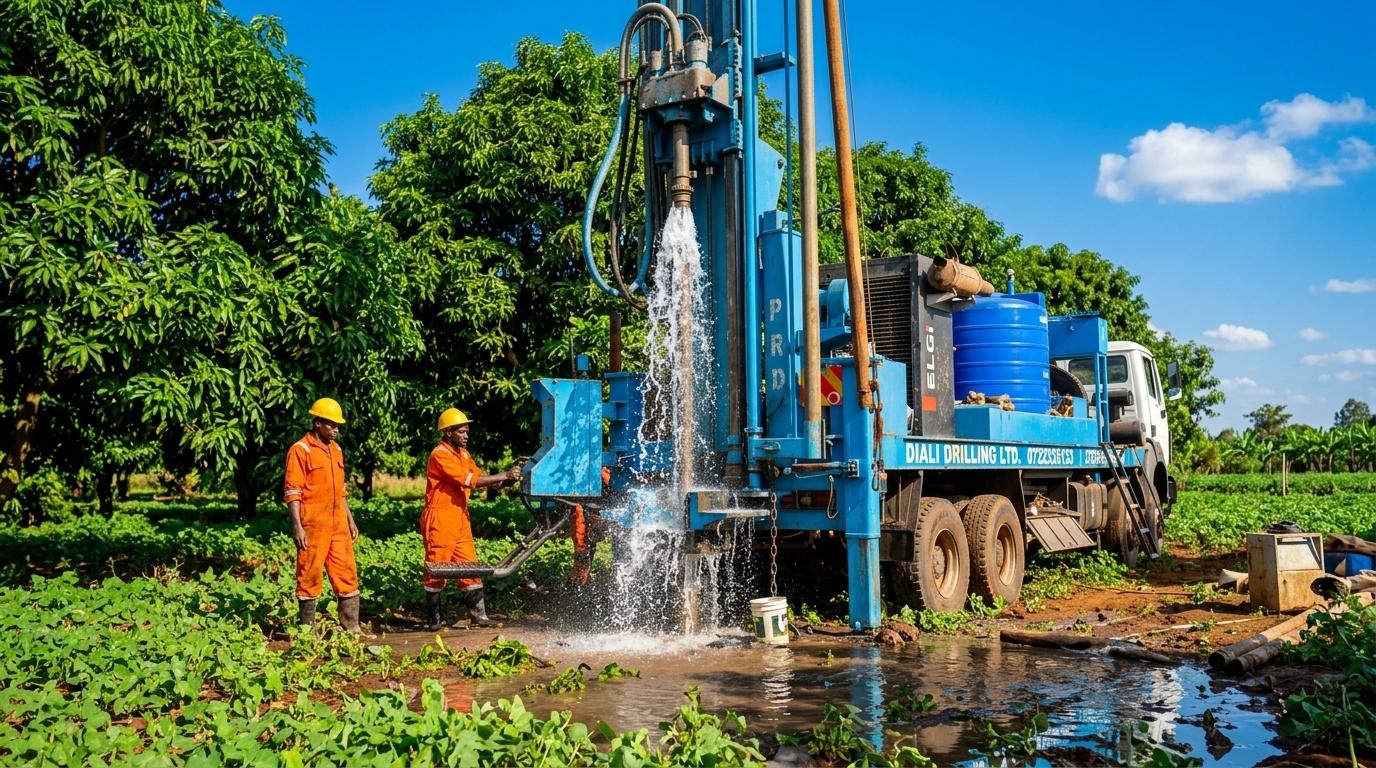
GossTech Kenya Technologies provides borehole drilling services in Baringo County, including groundwater exploration, hydrogeological surveys, geophysical surveys, drilling, casing installation, borehole development, pumping tests, submersible pump installation, solar water pumping, tank installation, water treatment and borehole maintenance.
Our borehole services are available in Baringo County, Nairobi and Across Kenya.
Borehole drilling is not simply about bringing a drilling rig to a property and drilling into the ground. A successful borehole project requires understanding the geological conditions, identifying promising groundwater locations, selecting appropriate drilling methods, installing the correct casing, conducting proper testing and designing a suitable pumping system.
Why Borehole Water Is Important in Baringo County
Baringo County experiences considerable variation in rainfall, terrain, land use and water availability. Some areas receive relatively better rainfall and support crop farming, while other regions are predominantly arid and semi-arid, where communities depend heavily on livestock and alternative water sources.
The county government identifies groundwater abstraction as an important source of water for domestic and livestock demand. County water development has also included boreholes, storage facilities, water pans, irrigation infrastructure and water supply schemes.
County Government of Baringo+1
A private or community borehole may help provide water for:
Homes and residential compounds
Apartments and rental properties
Hotels and lodges
Schools and colleges
Hospitals and health facilities
Churches and religious institutions
Farms and agricultural projects
Greenhouses
Livestock farms
Dairy operations
Poultry farming
Commercial businesses
Industrial facilities
Community water projects
Irrigation schemes
For landowners in areas where municipal water supply is unreliable, a professionally planned borehole can provide greater control over water availability.
However, groundwater conditions differ from one location to another. The presence of a successful borehole nearby does not automatically guarantee that another borehole on your property will produce the same quantity or quality of water.
Borehole Drilling Across Baringo County
GossTech Kenya Technologies offers borehole drilling and water system services throughout Baringo County.
We serve properties in urban centres, rural villages, agricultural areas, livestock zones, commercial developments and remote locations.
Our service coverage includes:
Kabarnet
Eldama Ravine
Marigat
Mogotio
Kabartonjo
Barwessa
Bartabwa
Chemususu
Maji Mazuri
Timboroa
Sacho
Tenges
Kapropita
Ewalel Chapchap
Kipsaraman
Saimo
Kolowa
Churo
Amaya
Tangulbei
Silale
Loiyamorok
Ribkwo
Tirioko
Mukutani
Mochongoi
Emining
Kisanana
Lembus
Koibatek
Lembus Kwen
Lembus Perkerra
Mumberes
Lake Baringo surroundings
Lake Bogoria surroundings
We also serve smaller settlements, farms, ranches, institutions and properties outside the major towns.
1. Borehole Drilling in Baringo Central
Baringo Central is an important area for residential water supply, institutional boreholes, agricultural water systems and commercial water projects. Kabarnet serves as the county headquarters and is a key centre for residential, business and institutional development.
Properties around Kabarnet and neighbouring rural settlements may require groundwater exploration before drilling because groundwater availability varies according to elevation, rock formations, geological structures and local recharge conditions.
Areas served in Baringo Central
Kabarnet
Sacho
Tenges
Kapropita
Ewalel Chapchap
Kabarnet town outskirts
Peri-urban residential properties
Rural farms
Institutional land
Commercial developments
Borehole services in Baringo Central
GossTech Kenya Technologies provides:
Hydrogeological surveys
Geophysical groundwater surveys
Borehole drilling
Borehole casing installation
Borehole screen installation
Gravel packing
Borehole development
Test pumping
Submersible pump installation
Solar pumping systems
Water storage tank installation
Water treatment
Borehole maintenance
Our drilling services can support residential homes, schools, healthcare facilities, farms, commercial establishments and community water projects.
2. Borehole Drilling in Baringo North
Baringo North includes extensive rural areas and communities where access to dependable water is important for domestic use, livestock keeping and agriculture.
The sub-county includes a mixture of settlements, highland areas, dryland environments and locations with differing groundwater conditions.
Areas covered
Kabartonjo
Barwessa
Bartabwa
Saimo Kipsaraman
Saimo Soi
Kipsaraman
Rural settlements throughout Baringo North
Farms and livestock properties
Borehole drilling for households and farms
Residents in Baringo North may require boreholes for:
Domestic water supply
Livestock watering
Irrigation
Dairy farming
Poultry projects
Greenhouse agriculture
Commercial water supply
Schools and health centres
Community water distribution
In dry areas, borehole projects should be planned with particular attention to groundwater sustainability, pumping rates, storage capacity and the intended demand.
3. Borehole Drilling in Baringo South
Baringo South includes Marigat, areas around Lake Baringo, agricultural settlements and locations with varying water requirements.
Water is essential for households, livestock, irrigation, horticulture, tourism businesses and community water schemes.
Areas served
Marigat
Ilchamus
Mukutani
Mochongoi
Lake Baringo area
Perkerra surroundings
Agricultural settlements
Ranches and livestock farms
Rural communities
Borehole applications in Baringo South
Borehole water may be used for:
Domestic water supply
Irrigated farming
Fruit and vegetable production
Livestock watering
Hotels and tourism facilities
Schools
Hospitals and dispensaries
Commercial water supply
Community water projects
In agricultural areas, the borehole pumping system should be designed according to the crop water requirements, irrigation method, available groundwater yield and the intended operating schedule.
A borehole producing water may not necessarily be suitable for intensive irrigation. Proper pumping tests help determine how the borehole performs under pumping conditions.
4. Borehole Drilling in Eldama Ravine
Eldama Ravine and its surrounding areas include agricultural land, residential developments, institutions, farms and commercial properties.
The region’s terrain varies between highland agricultural areas and lower settlements. Such variations mean groundwater exploration should be site-specific.
Areas covered in Eldama Ravine
Eldama Ravine town
Lembus
Lembus Kwen
Koibatek
Lembus Perkerra
Mumberes
Maji Mazuri
Timboroa
Ravine
Chemususu surroundings
Rural settlements
Agricultural farms
Borehole services for Eldama Ravine residents
We provide borehole drilling for:
Residential properties
Farms
Dairy farms
Schools
Hospitals
Churches
Hotels
Commercial buildings
Agricultural projects
Livestock facilities
The area has existing groundwater infrastructure, including boreholes serving institutions and settlements. However, existing borehole records should only be used as preliminary information when planning a new borehole because local groundwater conditions may differ significantly between properties.
County Government of Baringo+1
5. Borehole Drilling in Mogotio
Mogotio is an important agricultural, livestock and commercial area in Baringo County. Water is essential for household consumption, livestock production, crop farming, commercial enterprises and community water supplies.
Locations covered
Mogotio town
Emining
Kisanana
Rural Mogotio
Farms
Ranches
Livestock settlements
Agricultural areas
Commercial properties
Borehole drilling applications in Mogotio
Borehole water can support:
Homes and residential developments
Livestock farms
Cattle ranches
Dairy operations
Irrigation
Greenhouse farming
Poultry farms
Schools
Hotels
Businesses
Community water projects
For properties in Mogotio, borehole planning should consider the distance to the drilling location, accessibility of drilling equipment, local geological conditions, intended water use and possible water treatment requirements.
6. Borehole Drilling in Tiaty West
Tiaty West is one of the expansive areas of Baringo County. Water infrastructure is particularly important in communities where pastoralism and livestock keeping are major livelihoods.
Areas covered
Tirioko
Kolowa
Ribkwo
Tiaty West settlements
Pastoral communities
Livestock ranches
Remote villages
Community land
Borehole services in Tiaty West
We provide borehole planning and drilling services for:
Livestock watering
Community water projects
Schools
Dispensaries
Domestic water supply
Ranches
Agricultural projects
Commercial water supply
Because some locations are remote, drilling projects may require additional planning for mobilisation, fuel, equipment transportation, access roads and water storage.
A borehole in a pastoral area may also require a different design from a borehole serving a residential compound. The pumping system, storage capacity, water distribution points and solar power requirements should match the intended demand.
7. Borehole Drilling in Tiaty East
Tiaty East has extensive dryland areas and communities where reliable water supply is critical for people and livestock.
Areas covered
Silale
Tangulbei
Loiyamorok
Churo/Amaya
Remote Tiaty settlements
Livestock areas
Community land
Rural properties
Borehole projects for Tiaty East
GossTech Kenya Technologies can assist with borehole projects intended for:
Household water supply
Livestock watering
Community water supply
Schools
Health centres
Pastoral settlements
Ranches
Water storage and distribution
Solar-powered pumping
Groundwater exploration is especially important in dryland areas. A borehole location should not be selected simply because there is open land or because drilling is cheaper at a particular location.
The objective is to identify a scientifically promising drilling point and then design a borehole capable of meeting the intended water demand, subject to the actual groundwater conditions encountered.
Understanding Groundwater Conditions in Baringo County
Baringo County has highly varied environmental and geological conditions.
The county contains highlands, valleys, volcanic landscapes, drylands, rangelands and areas surrounding Lake Baringo and Lake Bogoria. These differences can influence groundwater occurrence, recharge, water quality and drilling conditions.
Approximately 80% of the county is described as arid or semi-arid in county planning documents. Groundwater therefore plays an important role in water supply across many areas.
2027)+1
Why groundwater conditions differ
Groundwater may occur within:
Weathered rock formations
Fractured volcanic rocks
Fault zones
Sedimentary formations
Alluvial deposits
Valley formations
Aquifers beneath dryland landscapes
Geological structures capable of storing or transmitting water
Some locations may have groundwater at relatively accessible depths, while other locations may require deeper drilling.
The drilling depth cannot be accurately determined from the county name alone.
Factors that influence borehole success
Geological formations beneath the property
Groundwater recharge
Fractures and geological structures
Aquifer thickness
Local topography
Seasonal groundwater variation
Existing boreholes in the area
Water demand
Pumping rates
Borehole construction quality
A proper groundwater investigation helps reduce the risk of drilling at an unsuitable location.
Hydrogeological Survey Before Borehole Drilling
A hydrogeological survey is an important initial step when planning a borehole in Baringo County.
The survey helps assess the geological and hydrogeological characteristics of the proposed drilling location.
What the survey investigates
Geological formations
Groundwater occurrence
Existing boreholes
Nearby springs
Local water sources
Groundwater recharge conditions
Terrain and drainage
Geological structures
Groundwater vulnerability
Potential drilling locations
Why it matters
A hydrogeological assessment helps the property owner understand the potential groundwater conditions before investing in drilling.
It may also help identify unsuitable areas where drilling could carry a higher risk.
Hydrogeological surveys are particularly important for:
Large farms
Remote properties
Commercial developments
Community boreholes
Schools
Hospitals
Livestock projects
Irrigation projects
Properties with no nearby successful boreholes
Geophysical Survey and Groundwater Location in Baringo
Geophysical surveys are used to investigate underground conditions and help identify locations with potentially favourable groundwater characteristics.
Depending on the site, geophysical methods may investigate variations in subsurface electrical properties that can help interpret geological formations and groundwater-bearing zones.
Geophysical survey services
GossTech Kenya Technologies can assist clients with groundwater exploration involving:
Resistivity investigations
Electrical geophysical measurements
Identification of potentially fractured formations
Investigation of geological structures
Assessment of subsurface layers
Selection of proposed borehole drilling points
Survey interpretation and recommendations
How the survey helps
A geophysical survey can help identify a drilling location with promising subsurface characteristics.
However, geophysical findings are interpretations of underground conditions. They cannot guarantee that a borehole will produce water, achieve a particular yield, or deliver water of a specific quality.
A survey report should be interpreted together with geological information, nearby borehole records and the intended water demand.
Our Borehole Drilling Process in Baringo County
GossTech Kenya Technologies follows a systematic approach to borehole development.
Step 1: Initial Consultation
We first establish the client’s requirements.
Questions considered include:
Where is the property located?
What is the intended use of the borehole?
Is the project residential, agricultural, commercial or institutional?
Will water be used for livestock?
Is irrigation required?
How many people will use the water?
Is the project intended to supply a community?
Is solar pumping preferred?
Is there an existing borehole that requires rehabilitation?
This information helps determine the preliminary project requirements.
Step 2: Site Assessment
The drilling location is assessed to establish accessibility and practical project considerations.
This may include:
Property access
Drilling rig access
Ground conditions
Site clearance
Available working space
Nearby buildings
Underground infrastructure
Proposed tank location
Pump installation requirements
Step 3: Hydrogeological and Geophysical Investigation
Groundwater investigations are undertaken where appropriate to identify promising drilling locations.
The findings help guide drilling-point selection and project planning.
Step 4: Regulatory and Permit Preparation
Borehole development requires compliance with applicable water-resource regulations and approvals.
The project owner should ensure that required permissions, licences and documentation are obtained before drilling begins.
Step 5: Mobilisation of Drilling Equipment
Drilling equipment, support machinery, tools, casing materials and other required supplies are transported to the site.
In remote locations of Baringo County, mobilisation may form a significant component of the project cost.
Step 6: Borehole Drilling
The borehole is drilled according to the selected drilling method and the geological conditions encountered.
Drilling progresses through different subsurface formations while monitoring the geological materials and water-bearing zones.
Step 7: Borehole Casing Installation
Appropriate casing is installed to help stabilise the borehole and protect the groundwater source.
The casing arrangement depends on the geological conditions and borehole design.
Step 8: Screen Installation
Where required, borehole screens are installed across selected water-bearing sections.
Screen design and placement are important because they help facilitate groundwater entry while limiting sediment movement.
Step 9: Gravel Packing
Where specified in the borehole design, gravel packing is undertaken around the screened section.
The gravel pack is selected according to the formation and screen design.
Step 10: Borehole Development
Borehole development helps remove drilling-related sediment and improve the hydraulic performance of the borehole.
Development may involve appropriate airlifting, pumping or other methods suitable for the borehole.
Step 11: Test Pumping
A pumping test is conducted to evaluate the borehole’s performance.
The test can help determine:
Water level before pumping
Water level during pumping
Drawdown
Recovery
Pumping rate
Borehole performance
Appropriate pump selection
Test pumping is important before installing a permanent pump.
Step 12: Water Quality Testing
Water samples should be tested to establish whether the water is suitable for the intended use.
Testing is particularly important for drinking water, livestock water, irrigation and commercial applications.
Step 13: Pump Installation
A suitable submersible pump is selected based on:
Borehole depth
Static water level
Pumping water level
Borehole yield
Required flow rate
Delivery head
Pipe size
Storage arrangement
Energy source
Step 14: Storage and Distribution
Water may be pumped into storage tanks before distribution to the property.
A properly designed storage system helps manage water demand and reduces unnecessary pump operation.
Step 15: Handover and Maintenance
The completed system should be inspected and the client advised on operation, maintenance, water testing and pump protection.
Borehole Water for Residential Homes in Baringo County
Homeowners in Baringo County may require boreholes to improve water availability for their households.
A residential borehole can supply water for:
Drinking after appropriate treatment
Cooking
Bathing
Laundry
Cleaning
Toilets
Gardening
Domestic livestock
General household use
Residential borehole installation
A residential borehole project may include:
Groundwater survey
Drilling
Casing
Borehole development
Test pumping
Water testing
Submersible pump
Water delivery pipes
Storage tank
Tank stand
Electrical or solar pumping
Distribution plumbing
The system should be sized according to the number of occupants, daily water consumption, property layout and water storage capacity.
Borehole Drilling for Apartments and Residential Estates
Baringo County has residential developments where reliable water supply is important for tenants, property managers and landlords.
A borehole can potentially supplement other water sources for:
Apartment buildings
Rental units
Residential estates
Staff housing
Private compounds
Gated communities
Guest houses
Important considerations
An apartment borehole may require:
Higher pumping capacity
Adequate storage
Water pressure management
Multiple distribution lines
Pump automation
Backup power
Water treatment
Proper plumbing
Before installing a borehole for a large residential development, the expected daily consumption should be estimated carefully.
Borehole Drilling for Agriculture in Baringo County
Agriculture is an important economic activity in parts of Baringo County. Water availability can significantly influence agricultural productivity, especially in areas where rainfall is variable.
Boreholes may support farms involved in:
Vegetable production
Fruit farming
Greenhouse farming
Nursery operations
Irrigated crop production
Livestock feed production
Dairy farming
Poultry
Horticulture
The county has been investing in irrigation infrastructure, and its agricultural development planning recognises the importance of expanding irrigated agriculture.
County Government of Baringo+1
Boreholes for irrigation
An irrigation borehole requires more detailed planning than a borehole intended only for domestic use.
The design must consider:
Crop type
Farm size
Daily water requirement
Irrigation method
Borehole yield
Seasonal groundwater availability
Pumping hours
Storage
Solar capacity
Pipe sizing
Pressure requirements
Irrigation methods
Depending on the farm, borehole water can be used for:
Drip irrigation
Sprinkler irrigation
Micro-irrigation
Greenhouse irrigation
Small-scale horticulture
Nursery irrigation
A borehole should not be assumed to support unlimited irrigation. Sustainable water use should be based on actual borehole test results and applicable water-resource requirements.
Borehole Drilling for Livestock and Ranches
Livestock production is particularly important in the dryland regions of Baringo County.
Water is needed for:
Cattle
Goats
Sheep
Camels
Poultry
Dairy animals
Ranch livestock
A livestock borehole project may include a complete water distribution system.
Recommended livestock borehole infrastructure
Borehole
Submersible pump
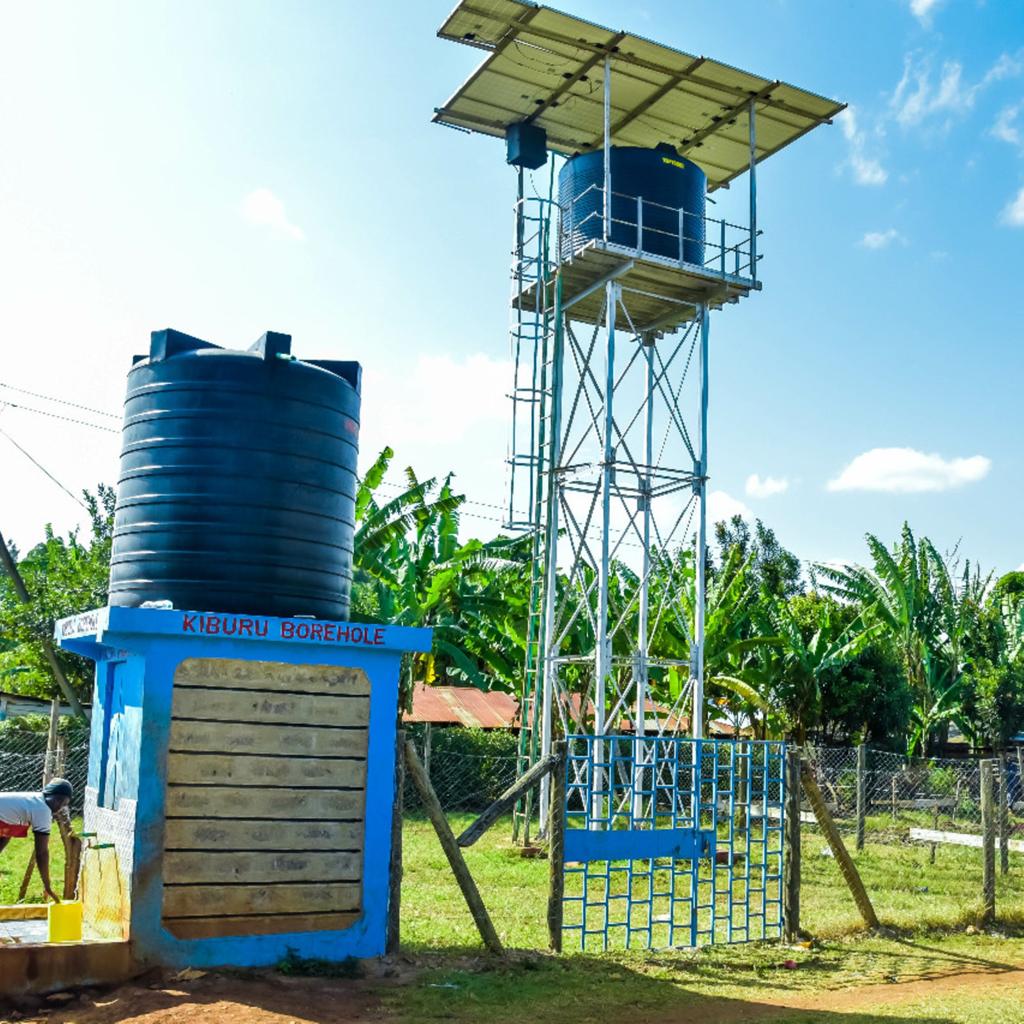
Solar pumping system
Storage tanks
Elevated tank structure
Water troughs
Pipelines
Valves
Water distribution points
Pump controls
For ranches and large livestock operations, the water system may need to supply several troughs and watering points distributed across the property.
The design should account for animal numbers, peak water consumption, storage requirements and the pumping capacity of the borehole.
Borehole Drilling for Schools, Hospitals and Institutions
Institutions require dependable water for daily operations.
GossTech Kenya Technologies provides borehole services for institutions throughout Baringo County.
Institutions that may require boreholes
Primary schools
Secondary schools
Colleges
Universities
Hospitals
Health centres
Dispensaries
Churches
Children’s homes
Rehabilitation centres
Training institutions
Government facilities
Community centres
Institutional borehole requirements
Institutional projects may require:
Groundwater survey
Borehole drilling
High-capacity storage
Pumping systems
Water treatment
Distribution networks
Solar pumping
Backup power
Water quality monitoring
The borehole system should be designed according to the institution’s population and expected water consumption.
Commercial Borehole Drilling in Baringo County
Businesses can benefit from reliable water infrastructure.
Commercial boreholes may serve:
Hotels
Lodges
Restaurants
Camps
Tourism facilities
Car washes
Construction sites
Factories
Commercial farms
Processing facilities
Rental properties
Businesses requiring water for cleaning and production
Commercial borehole projects should carefully consider water demand, operating costs, pump efficiency, water treatment requirements and storage.
Solar-Powered Borehole Pumping in Baringo
Solar pumping is an attractive option for many borehole projects in Baringo County, especially in areas where electricity supply is unavailable, unreliable or expensive to extend.
Solar-powered borehole systems use solar panels to power a suitable borehole pump.
Benefits of solar borehole pumping
Reduced dependence on grid electricity
Lower recurring energy expenses
Suitable for remote locations
Useful for livestock watering
Suitable for agricultural applications
Can support community water supply
Reduced dependence on fuel-powered generators
Solar borehole system components
A complete solar borehole pumping system may include:
Solar panels
Solar mounting structures
Solar pump controller
Submersible pump
Borehole cables
Delivery pipes
Water storage tanks
Float switches
Dry-run protection
Tank-level controls
Surge protection
Electrical safety components
Solar system sizing
Solar panels and pumps should not be selected simply by purchasing the largest available system.
Correct sizing depends on:
Borehole depth
Water level
Pumping water level
Required flow rate
Daily water demand
Solar availability
Tank capacity
Pipe distance
Elevation difference
Operating hours
A solar pumping system can be designed for residential, livestock, agricultural, commercial or institutional applications.
Borehole Water Storage and Distribution Systems
A borehole alone may not provide a complete water supply solution.
Storage is important because it allows water to be pumped when available and consumed later.
Water storage options
Depending on the project, we can assist with:
Plastic water tanks
Steel tanks
Masonry tanks
Elevated tanks
Ground-level tanks
Large commercial storage systems
Multiple tank installations
Water distribution infrastructure
A complete water system may include:
Main water pipelines
Distribution pipes
Valves
Pressure systems
Water troughs
Irrigation pipelines
Water taps
Tank float controls
Pump automation
For farms and ranches, water distribution may be designed to reach multiple areas of the property.
For residential properties, storage and distribution can be designed to supply the house, garden, laundry area and other facilities.
Borehole Water Testing and Treatment in Baringo County
Borehole water should not automatically be assumed to be safe for drinking simply because it is clear.
Groundwater quality can vary depending on the geological formations, surrounding land use, groundwater chemistry and other environmental factors.
Baringo County has diverse environments, including areas around Lake Baringo and Lake Bogoria, dryland regions and different geological formations. Water quality therefore needs to be assessed on a site-specific basis.
Borehole water testing
Water testing may examine parameters such as:
pH
Electrical conductivity
Total dissolved solids
Turbidity
Hardness
Iron
Fluoride
Nitrates
Microbiological contamination
Other relevant chemical parameters
The appropriate tests depend on the intended use of the water and the local circumstances.
Borehole water treatment
Depending on test results, treatment may involve:
Sediment filtration
Sand filtration
Activated carbon filtration
Water disinfection
Chlorination
UV treatment
Iron removal
Water softening
Reverse osmosis
Fluoride treatment
Specialised treatment systems
Drinking water treatment
Where borehole water is intended for drinking, the treatment system should be selected according to laboratory results.
A filtration system that removes sediment may not remove dissolved minerals or all chemical contaminants.
Proper testing before selecting a treatment system can prevent unnecessary expenditure on equipment that does not address the actual water quality problem.
Borehole Repair, Rehabilitation and Maintenance in Baringo County
Not every water problem requires drilling a new borehole.
Existing boreholes may experience reduced production, pump failures, electrical problems, sediment accumulation or water quality changes.
GossTech Kenya Technologies can assist with borehole troubleshooting and maintenance services.
Common borehole problems
1. Borehole producing less water
Possible causes include:
Pump problems
Blocked screens
Sediment accumulation
Reduced groundwater levels
Damaged pumping equipment
Excessive pumping
2. Borehole pump failure
Possible causes include:
Electrical faults
Cable damage
Motor failure
Pump wear
Incorrect pump selection
Voltage problems
3. Borehole producing sand
Possible causes may include:
Poor borehole development
Screen damage
Incorrect screen selection
Formation instability
Excessive pumping rates
4. Pump repeatedly switching off
Potential causes include:
Dry-run protection activation
Low water levels
Electrical problems
Faulty controllers
Pump overheating
Incorrect installation
5. Water becoming discoloured
Possible causes may include:
Sediment
Iron
Corrosion
Borehole disturbance
Changes in groundwater conditions
6. Borehole requiring rehabilitation
A borehole that has deteriorated over time may require investigation and rehabilitation.
Depending on the condition, rehabilitation may include:
Borehole cleaning
Development
Pump replacement
Electrical repairs
Water testing
Screen assessment
Pumping system upgrades
Borehole Projects and Water Infrastructure in Baringo
Baringo County has a substantial history of groundwater and water infrastructure development.
County government records describe borehole development, water storage facilities, water pans, rural water supply schemes and irrigation projects. The county reports significant expansion of its borehole infrastructure over the years.
County Government of Baringo+1
Examples of documented borehole and water infrastructure projects include locations in:
Baringo North
Baringo Central
Baringo South
Mogotio
Eldama Ravine
Tiaty
County water records also list boreholes in locations including Timboroa, Siryat, Kisorobi, Seguton, Torongo, Tulwamoi, Igure, Israel, Kaprorwa and Maji Mazuri, demonstrating the varied groundwater infrastructure and conditions encountered in the county.
County Government of Baringo
Existing borehole information may help guide preliminary investigations, but it should not replace a site-specific groundwater survey.
Complete Baringo County Borehole Drilling Coverage by Ward
GossTech Kenya Technologies offers borehole drilling and water-related services throughout Baringo County’s seven sub-counties.
Baringo County has 30 electoral wards distributed across seven sub-counties.
County Government of Baringo+1
Baringo Central Constituency
Wards:
Kabarnet
Sacho
Tenges
Kapropita
Ewalel Chapchap
Baringo North Constituency
Wards:
Barwessa
Saimo Kipsaraman
Saimo Soi
Kabartonjo
Bartabwa
Baringo South Constituency
Wards:
Mukutani
Marigat
Mochongoi
Ilchamus
Eldama Ravine Constituency
Wards:
Lembus
Ravine
Lembus Kwen
Koibatek
Lembus Perkerra
Mumberes/Maji Mazuri
Mogotio Constituency
Wards:
Mogotio
Emining
Kisanana
Tiaty West
Wards:
Tirioko
Kolowa
Ribkwo
Tiaty East
Wards:
Silale
Tangulbei
Loiyamorok
Churo/Amaya
This coverage includes urban centres, rural villages, farms, pastoral settlements, commercial properties, institutions, community projects and remote locations across Baringo County.
Borehole Drilling Costs in Baringo County
The cost of drilling a borehole depends on the project requirements and the conditions encountered at the site.
There is no single fixed borehole drilling price applicable to every property in Baringo County.
Indicative borehole project costs
| Service | Estimated Cost (KSh) |
|---|---|
| Hydrogeological survey | 40,000–100,000 |
| Geophysical survey | 35,000–100,000 |
| Permits and approvals | 30,000–150,000+ |
| Mobilisation | 50,000–200,000+ |
| Drilling per metre | 6,000–12,000+ |
| Plain casing per metre | 2,500–6,000+ |
| Screen casing per metre | 3,000–7,000+ |
| Gravel pack | 20,000–100,000+ |
| Borehole development | 30,000–100,000+ |
| Pumping test | 30,000–100,000+ |
| Water quality testing | 15,000–50,000+ |
| Submersible pump | 50,000–300,000+ |
| Pump installation | 30,000–100,000+ |
| Electrical installation | 30,000–150,000+ |
| Solar pumping system | 150,000–800,000+ |
| Water storage tanks | 20,000–300,000+ |
| Tank tower/structure | 50,000–500,000+ |
These are planning estimates only. Actual quotations depend on location, drilling depth, geological conditions, equipment specifications, water requirements and project scope.
Typical project budgets
| Project type | Indicative Budget |
|---|---|
| Basic residential borehole | KSh 1.2M–2.0M+ |
| Residential borehole with storage | KSh 1.5M–2.8M+ |
| Residential borehole with solar | KSh 2.0M–4.5M+ |
| Commercial/institutional borehole | KSh 2.5M–4.5M+ |
| Agriculture/livestock borehole | Project-specific |
| Large community water project | Project-specific |
Remote locations in Tiaty, parts of Baringo North and other areas with difficult access may require additional mobilisation and logistics costs.
Borehole Permits and Water Regulations in Baringo County
Borehole drilling must comply with the applicable water-resource laws, regulations and approval requirements.
Before drilling, the project owner should confirm the relevant requirements with the appropriate authorities, including the Water Resources Authority (WRA) and other relevant agencies.
Depending on the project, requirements may include:
Groundwater investigation documentation
Borehole drilling approvals
Water-resource permits
Environmental requirements where applicable
Drilling records
Borehole completion documentation
Pumping test records
Water quality testing
Abstraction and use requirements
Regulatory requirements may vary depending on the location, borehole purpose, abstraction volume and project characteristics.
GossTech Kenya Technologies can assist clients in understanding the technical steps involved in planning and developing a borehole project.
Frequently Asked Questions About Borehole Drilling in Baringo County
1. How much does borehole drilling cost in Baringo County?
The cost depends on the drilling depth, geological conditions, casing requirements, mobilisation, pump installation, water storage and whether solar pumping is required. A site-specific quotation is recommended.
2. How deep should a borehole be drilled in Baringo?
There is no universal depth for Baringo County. Groundwater conditions differ between highlands, dryland regions, valleys and other geological environments. Hydrogeological investigations and drilling findings help establish the appropriate depth.
3. Can I drill a borehole in Kabarnet?
Yes, borehole drilling can be considered in Kabarnet and surrounding areas. The proposed location should first be evaluated to establish groundwater potential and practical drilling requirements.
4. Do you drill boreholes in Marigat?
Yes. We provide borehole drilling services and related water infrastructure solutions in Marigat and surrounding Baringo South areas.
5. Do you offer borehole drilling in Eldama Ravine?
Yes. Our borehole services cover Eldama Ravine, Mumberes, Maji Mazuri, Timboroa, Lembus, Koibatek and surrounding locations.
6. Can you drill boreholes in Mogotio?
Yes. We serve Mogotio, Emining, Kisanana, farms, livestock properties, commercial developments and rural settlements.
7. Do you drill boreholes in Tiaty?
We provide borehole drilling services for projects in Tiaty East and Tiaty West, subject to site accessibility, project logistics and the technical requirements of the location.
8. Can a borehole provide water for livestock?
Yes, boreholes can be designed for livestock watering where the groundwater source and sustainable pumping capacity support the intended demand.
9. Can borehole water be used for irrigation?
Yes, where the borehole yield, water quality and applicable water-resource requirements support the proposed irrigation project.
10. Do you install solar borehole pumps?
Yes. We provide solar pumping solutions for residential, agricultural, livestock, commercial and institutional borehole projects.
11. Can you install water tanks after drilling?
Yes. Borehole projects can include storage tanks, tank stands, pipelines, pump controls and water distribution infrastructure.
12. Is borehole water safe for drinking?
Not automatically. Water should be tested, and appropriate treatment installed where necessary.
13. Can you repair an existing borehole?
Yes. We can assist with borehole troubleshooting, pump replacement, rehabilitation, cleaning, maintenance and water system upgrades.
14. Do you provide borehole drilling in remote villages?
Yes. We serve rural and remote locations throughout Baringo County, although access and mobilisation logistics may affect project costs.
15. Does a geophysical survey guarantee water?
No. A geophysical survey helps assess underground conditions and identify promising drilling locations, but groundwater occurrence, yield and quality cannot be guaranteed.
Why Choose GossTech Kenya Technologies for Borehole Drilling?
When investing in a borehole, choosing a service provider who understands the complete water system is important.
GossTech Kenya Technologies offers solutions covering the major stages of borehole development:
Groundwater exploration
Hydrogeological surveys
Geophysical surveys
Borehole drilling
Borehole casing
Borehole development
Pumping tests
Submersible pump installation
Solar borehole pumping
Water storage
Water distribution
Water quality testing
Water treatment
Borehole maintenance
Borehole rehabilitation
Our goal is to help clients plan water projects that are appropriate for their location, water requirements and budget.
Whether you need water for your home, farm, livestock, school, hotel, business, institution or community, we can assist with planning your borehole project.
Borehole Drilling in Baringo County – Contact GossTech Kenya Technologies
Are you planning to drill a borehole in Baringo County?
Contact GossTech Kenya Technologies for borehole drilling, groundwater surveys, pump installation, solar pumping, water storage, water treatment and borehole maintenance.
We serve:
Kabarnet, Marigat, Eldama Ravine, Mogotio, Kabartonjo, Barwessa, Bartabwa, Chemususu, Timboroa, Maji Mazuri, Sacho, Tenges, Kapropita, Tiaty, Tangulbei, Kolowa, Churo, Silale, Emining, Kisanana, Mumberes, Koibatek, Lembus, Mukutani, Mochongoi and surrounding areas.
GossTech Kenya Technologies
📞 Phone: 0723613664
📧 Email: info@gosstech.co.ke
🌐 Website: www.gosstech.co.ke
Borehole Drilling Services in Baringo County, Nairobi and Across Kenya.
Reliable water begins with proper planning, professional groundwater investigation and a well-designed borehole system.