
Borehole Drilling in Meru County, Kenya – Professional Borehole Drilling Services by GossTech Kenya Technologies
Meta Description: Professional borehole drilling in Meru County. Groundwater surveys, drilling, casing, borehole development, water testing, solar pumps and complete water systems in Meru, Maua, Nkubu, Timau, Igembe, Tigania, Buuri, Imenti and surrounding areas.
Professional Borehole Drilling Services in Meru County
Reliable water supply is essential for homes, farms, businesses, schools, hospitals, hotels, livestock farmers, institutions and communities throughout Meru County. Although parts of Meru benefit from rivers, springs, water projects and piped water systems, many property owners still experience unreliable water supply, seasonal shortages, high water bills, limited water distribution or challenges accessing sufficient water for domestic and agricultural use.
GossTech Kenya Technologies provides professional borehole drilling services in Meru County, offering groundwater exploration, hydrogeological surveys, geophysical surveys, borehole drilling, casing installation, borehole development, pumping tests, water quality testing, submersible pump installation, solar water pumping systems, water storage and complete borehole water supply solutions.
We serve customers in Meru Town, Maua, Nkubu, Timau, Nanyuki-side communities bordering Meru, Imenti, Buuri, Tigania, Igembe, Mitunguu, Kianjai, Laare, Mikinduri, Nchiru, Kibirichia, Kiirua, Kathwana-side communities and surrounding rural areas.
Whether you need a borehole for a private residence, agricultural land, commercial property, hotel, school, church, livestock farm, community water project or industrial facility, our team can assist with planning and the construction of a suitable groundwater system.
Our borehole drilling services cover Meru County, Nairobi and Across Kenya.
Why Borehole Water Is Important in Meru County
Meru County has diverse geographical, climatic and agricultural conditions. Areas around the Mount Kenya slopes, central Meru, the Nyambene Hills, Imenti, Buuri, Tigania and Igembe experience different rainfall patterns, terrain and water-access conditions.
Water demand is increasing due to:
Growing residential settlements
Expanding towns and trading centres
Agricultural production
Irrigation farming
Livestock keeping
Commercial developments
Schools and educational institutions
Hospitals and healthcare facilities
Hotels, lodges and tourism facilities
Industrial and manufacturing activities
Community water supply projects
A privately owned borehole can provide greater control over water availability, particularly where public water supplies are unreliable or insufficient for the property’s requirements.
The County Government of Meru has itself invested in borehole drilling, borehole equipping, water distribution infrastructure, tanks and community water projects, reflecting the importance of groundwater and water infrastructure in local development. County planning documents have also documented borehole development and equipping programmes.
County Government of Meru+2
For individual property owners, a properly designed borehole can become a long-term investment in water security.
Borehole Drilling Services in Meru Town
Meru Town is one of the county’s major urban centres, serving residential neighbourhoods, businesses, institutions, commercial buildings and surrounding settlements.
Demand for independent water sources continues to grow among property owners who require water for:
Residential apartments
Private homes
Commercial premises
Offices
Hotels
Restaurants
Schools
Hospitals
Construction projects
Rental properties
Commercial farms
GossTech Kenya Technologies offers borehole drilling and water system installations in Meru Town and surrounding areas.
Boreholes for residential properties in Meru
Residential boreholes can support households that require reliable water for:
Drinking water after appropriate testing and treatment
Cooking
Bathing
Laundry
Cleaning
Gardening
Landscaping
Watering livestock
Filling storage tanks
A residential borehole should be designed according to the household’s daily water demand, available groundwater potential, borehole depth, pumping requirements and storage capacity.
Boreholes for apartments and rental properties
Apartment developments and rental properties may have significant daily water demand.
A borehole system can incorporate:
Borehole drilling
Casing and screens
Submersible pump
Pump control equipment
Storage tanks
Elevated tank structures
Distribution piping
Pressure systems
Water treatment
Backup power solutions
The system must be sized according to the number of occupants, water consumption patterns and the borehole’s sustainable yield.
Borehole Drilling in Nkubu
Nkubu is an important commercial and residential centre in Imenti South and serves surrounding agricultural communities.
Property owners in Nkubu and nearby settlements may require boreholes for domestic use, commercial businesses, irrigation, livestock, schools and residential developments.
GossTech Kenya Technologies provides borehole drilling services in Nkubu and surrounding locations, including:
Nkubu Town
Mitunguu
Nkuene
Igoji
Abogeta
Mweru
Nearby villages and rural settlements
Boreholes for Nkubu farms
Agriculture remains an important activity throughout many areas around Nkubu.
A borehole may support:
Irrigation of vegetables
Fruit production
Greenhouse farming
Dairy farming
Poultry farming
Livestock watering
Farm workers’ domestic water
Cleaning farm equipment
Agricultural processing
The borehole’s yield should be carefully evaluated before designing a large irrigation system.
A farmer should not automatically assume that a borehole capable of supplying domestic water will also support extensive irrigation.
Borehole Drilling in Mitunguu
Mitunguu and surrounding agricultural areas have demand for dependable water for domestic use and farming.
Borehole drilling in Mitunguu may be required for:
Residential compounds
Commercial properties
Irrigation farms
Greenhouses
Fruit farms
Livestock
Poultry
Schools
Community water projects
Irrigation boreholes in Mitunguu
Farmers considering borehole irrigation should first calculate their water requirements.
The planning process should consider:
Size of the farm
Crop type
Irrigation method
Daily irrigation requirements
Seasonal water demand
Borehole yield
Pumping hours
Storage requirements
Solar pumping capacity
Drip irrigation systems generally allow farmers to use water more efficiently than poorly designed flood irrigation systems.
A borehole can be integrated with drip irrigation, storage tanks and solar-powered pumping to create a more efficient farm water supply.
Borehole Drilling in Maua and Igembe Region
Maua is a major commercial centre serving Igembe and surrounding communities.
Borehole drilling services in Maua are relevant for residential properties, farms, commercial businesses, institutions and community projects.
GossTech Kenya Technologies provides borehole-related services in:
Maua
Kianjai
Laare
Nchiru
Kibirichia
Igembe South
Igembe Central
Igembe North
Kiengu
Mutuati
Surrounding villages and settlements
Boreholes in Maua
Property owners in Maua may require water for:
Homes
Rental apartments
Hotels
Restaurants
Commercial buildings
Schools
Hospitals
Agricultural land
Livestock farms
A complete borehole project may include groundwater assessment, drilling, casing, pump installation, storage and distribution.
Boreholes in Kianjai
Kianjai and surrounding settlements can benefit from properly planned groundwater development for residential, agricultural and community water supply.
Before drilling, the proposed location should be evaluated to determine the most suitable drilling point and possible groundwater-bearing formations.
Boreholes in Laare
Laare and nearby communities require water for domestic, agricultural and commercial activities.
Borehole systems may be developed for:
Homes
Farms
Livestock
Schools
Churches
Businesses
Community projects
The system should be designed around the actual water demand and the sustainable pumping capacity determined through testing.
Boreholes in Nchiru and surrounding settlements
Borehole drilling may support residential developments, farms, institutions and community water projects around Nchiru and neighbouring areas.
The location of the borehole should be selected carefully to reduce contamination risks and improve the chances of intersecting suitable groundwater-bearing formations.
Borehole Drilling in Tigania Region
Tigania covers a significant part of northern Meru County, including communities with residential, agricultural, livestock and commercial water needs.
GossTech Kenya Technologies provides borehole drilling and groundwater solutions in:
Tigania East
Tigania West
Tigania Central
Mikinduri
Miathene
Muthara
Muriri
Kianjai
Karama
Athwana
Thangatha
Nearby villages and settlements
The Tigania region has varying terrain, rainfall and groundwater conditions. Consequently, borehole drilling projects should be planned according to the specific location rather than relying on information from another property.
Borehole drilling in Mikinduri
Mikinduri and its surrounding communities may require boreholes for domestic water, livestock, agriculture and commercial developments.
We can assist with:
Hydrogeological assessment
Geophysical survey
Borehole siting
Drilling
Casing installation
Borehole development
Pump testing
Water quality testing
Pump installation
Solar water systems
Storage tank installation
Boreholes in Miathene
Miathene and surrounding areas have residential, agricultural and institutional water requirements.
A borehole project in Miathene may be designed for a household, farm, school, church, commercial facility or community water supply.
Before drilling, a groundwater assessment helps determine the recommended location and drilling strategy.
Borehole drilling in Muthara
Muthara and surrounding communities can benefit from professionally planned groundwater development.
Depending on the intended use, a borehole may be designed to supply:
Domestic water
Livestock water
Agricultural irrigation
Commercial facilities
Institutional facilities
The final pumping system should be selected after the borehole has been drilled, developed and tested.
Borehole Drilling in Imenti North
Imenti North includes Meru Town and surrounding residential, commercial and agricultural areas.
Borehole drilling services are available in locations including:
Meru Town
Municipality
Nyaki
Buuri-side settlements
Kirimaara
Nthimbiri
Zima Moto
Other surrounding communities
The County Government has listed borehole projects in locations including Zima Moto, Munithu and Gituine, demonstrating the continuing role of borehole infrastructure in the region’s water development.
County Government of Meru+1
Boreholes for Meru urban properties
Urban property owners may require boreholes where municipal water is insufficient, unreliable or expensive relative to the property’s demand.
Applications include:
Apartments
Commercial buildings
Hotels
Schools
Hospitals
Offices
Warehouses
Residential estates
Construction developments
An urban borehole project must carefully consider space for the drilling rig, underground utilities, neighbouring buildings, sanitation facilities, drainage and access for equipment.
Borehole drilling in Nyaki
Nyaki and surrounding settlements can benefit from boreholes for domestic use, farming and community water supply.
Before drilling, the proposed site should be assessed for:
Groundwater potential
Geological conditions
Surface drainage
Existing wells and boreholes
Possible contamination sources
Accessibility
Water demand
Borehole Drilling in Imenti Central
Imenti Central includes important residential, agricultural and commercial areas around Meru and neighbouring settlements.
Borehole drilling may be required in:
Central Imenti
Kirichu
Abothuguchi
Surrounding settlements
Agricultural communities
Residential areas
Institutional properties
A borehole is particularly useful where water is needed throughout the year for household activities, agriculture or business operations.
Agricultural boreholes
Agricultural boreholes can provide water for:
Horticulture
Greenhouses
Vegetables
Fruit trees
Dairy farming
Poultry
Livestock
Farm workers
Agricultural processing
The borehole should be tested to determine whether its yield is suitable for the proposed irrigation demand.
Borehole Drilling in Imenti South
Imenti South includes areas with agricultural activity, residential developments and growing commercial settlements.
We provide borehole drilling services in areas such as:
Nkubu
Nkuene
Igoji
Abogeta
Mitunguu
Surrounding villages
Water supply for homes in Imenti South
Homeowners may require boreholes to provide a dependable source of water for daily household use.
A residential borehole project can include:
Groundwater assessment
Borehole siting
Drilling
Installation of casing and screens
Borehole development
Pumping test
Water quality testing
Pump installation
Storage tank installation
Connection to household plumbing
Boreholes for agricultural irrigation
Farmers can use groundwater to supplement rainfall and existing water supplies.
The irrigation system may include:
Borehole
Submersible pump
Solar panels
Pump controller
Storage tanks
Irrigation pipes
Drip irrigation
Sprinklers
Water filters
The design should be based on the farm’s actual water requirements and the sustainable borehole yield.
Borehole Drilling in Buuri
Buuri is an important agricultural region with diverse terrain and settlements.
Borehole drilling services may be required in:
Timau
Kibirichia
Kiirua
Buuri East
Buuri West
Nearby agricultural settlements
Rural communities
Boreholes in Timau
Timau and surrounding agricultural areas have demand for water for residential properties, horticulture, livestock, commercial farms and institutions.
A borehole can help support:
Greenhouses
Vegetable farming
Dairy farming
Livestock watering
Residential developments
Commercial farms
Agricultural processing
Irrigation boreholes for Timau farmers
Farmers planning irrigation should consider the relationship between borehole yield and crop water demand.
For example, a borehole may produce sufficient water for a small greenhouse but may not support a large farm without appropriate storage and irrigation scheduling.
We can assist in planning borehole systems with:
Solar pumping
Storage tanks
Drip irrigation
Pump controls
Water distribution
Boreholes in Kibirichia
Kibirichia and surrounding settlements require water for domestic, commercial and agricultural use.
Borehole drilling projects can be planned for:
Homes
Farms
Institutions
Commercial properties
Livestock
Community water systems
Boreholes in Kiirua
Groundwater development around Kiirua should be guided by site-specific assessments.
A proposed borehole may be intended for household water, livestock, irrigation or a commercial facility. The intended use determines the pumping system and storage requirements.
Borehole Drilling in Igembe South
Igembe South includes settlements and agricultural areas with demand for groundwater.
Borehole services may cover:
Maua
Kiengu
Gitura
Surrounding villages
Agricultural areas
Commercial settlements
County planning and procurement records have referenced borehole development projects in Maua Ward and surrounding communities, including Gitura.
County Government of Meru+1
Boreholes for agricultural communities
Farmers may require groundwater for:
Irrigation
Livestock
Poultry
Farm homes
Greenhouses
Fruit production
Agricultural businesses
A borehole can be combined with storage and solar pumping to support water distribution during periods when electricity is unavailable or expensive.
Borehole Drilling in Igembe Central
Igembe Central contains residential, commercial and agricultural communities requiring dependable water sources.
Borehole drilling may be considered for:
Homes
Farms
Schools
Churches
Commercial buildings
Community water projects
The proposed borehole location should be selected after an assessment of local geological conditions and groundwater potential.
Borehole Drilling in Igembe North
Igembe North includes areas where water access may be particularly important for domestic use, livestock and community development.
Boreholes may be designed for:
Rural homes
Livestock farms
Community water supply
Schools
Health facilities
Agricultural activities
Small commercial businesses
The borehole design must account for local conditions, expected water demand and the available groundwater resource.
Groundwater Survey and Borehole Siting in Meru County
Before drilling a borehole, determining the appropriate drilling location is an important step.
A borehole is an investment. Drilling at an unsuitable location may increase costs or result in poor water production.
GossTech Kenya Technologies can assist property owners with groundwater assessment and borehole siting.
Hydrogeological survey
A hydrogeological survey examines the area’s geological and hydrogeological characteristics.
It can help assess:
Geological formations
Groundwater occurrence
Aquifer characteristics
Existing boreholes
Springs
Water wells
Drainage patterns
Groundwater recharge conditions
Possible drilling targets
The survey helps guide the borehole project but does not guarantee that water will be found or that a particular yield will be achieved.
Geophysical survey
Geophysical investigations can help identify underground conditions that may be favourable for groundwater occurrence.
Depending on the survey method and geological setting, investigations may help identify:
Possible groundwater-bearing structures
Fractured rock zones
Weathered formations
Geological boundaries
Variations in subsurface resistivity
The findings are interpreted alongside geological information and existing groundwater records.
Selecting the borehole drilling point
The borehole location should also consider practical site factors.
These include:
Access for the drilling rig
Distance from buildings
Distance from septic tanks
Distance from pit latrines
Drainage
Flood risk
Underground utilities
Property boundaries
Space for water storage
Pump installation access
Future maintenance access
A technically suitable groundwater location must also be practical and safe for drilling and future operation.
Understanding Groundwater Conditions in Meru County
Meru County has varied geographical and climatic conditions, ranging from wetter areas associated with Mount Kenya and the Nyambene Hills to areas with drier conditions.
Groundwater conditions can therefore vary significantly from one location to another.
Some properties may have groundwater associated with weathered formations, fractured volcanic rocks or other geological structures. Other locations may require deeper drilling or careful investigation to identify suitable aquifers.
The presence of rivers, springs, shallow wells or existing boreholes in an area can provide useful information, but it does not automatically establish the expected yield of a new borehole.
Factors affecting borehole depth
The depth of a borehole in Meru may depend on:
Local geology
Groundwater-bearing formations
Weathered rock thickness
Fractures
Aquifer depth
Terrain
Groundwater levels
Nearby borehole records
Survey findings
Water demand
Two properties in the same village may require different drilling depths.
Factors affecting borehole yield
Borehole yield may depend on:
Aquifer characteristics
Geological formations
Fracture networks
Recharge conditions
Borehole construction
Borehole development
Pumping rate
Seasonal groundwater conditions
The final sustainable pumping rate should be established through an appropriate pumping test rather than assumed before drilling.
Water quality considerations
Groundwater may contain naturally occurring minerals or contaminants introduced through human activities.
Water quality testing should assess suitability for the intended purpose.
Depending on the test, water quality parameters may include:
pH
Electrical conductivity
Total dissolved solids
Turbidity
Hardness
Iron
Fluoride
Nitrates
Chlorides
Microbiological contamination
Water intended for drinking should be tested before consumption.
Complete Borehole Drilling Process in Meru County
GossTech Kenya Technologies offers a structured approach to borehole construction.
Step 1: Initial consultation
The first stage involves understanding the client’s water requirements.
We establish whether the borehole is intended for:
Domestic use
Irrigation
Livestock
Commercial use
Industrial use
Institutional use
Community water supply
We also discuss the property location, access, expected water demand, available space and project budget.
Step 2: Groundwater assessment
A suitable assessment is carried out to help identify potential drilling locations.
This may involve:
Hydrogeological assessment
Geophysical investigation
Geological interpretation
Review of nearby borehole information
Assessment of terrain
Site inspection
Step 3: Borehole siting
The proposed drilling location is selected based on the investigation and practical site conditions.
The location should allow safe access for drilling equipment and provide adequate space for borehole construction and future maintenance.
Step 4: Permits and approvals
Borehole drilling projects must comply with applicable Kenyan water-resource, environmental and construction requirements.
Depending on the project, approvals and documentation may involve the relevant water-resource authorities and other regulatory bodies.
Clients should confirm the applicable requirements before drilling begins.
Step 5: Mobilization
Drilling equipment, materials and personnel are transported to the site.
Mobilization costs may vary depending on:
Distance
Road conditions
Site accessibility
Equipment requirements
Project size
Location
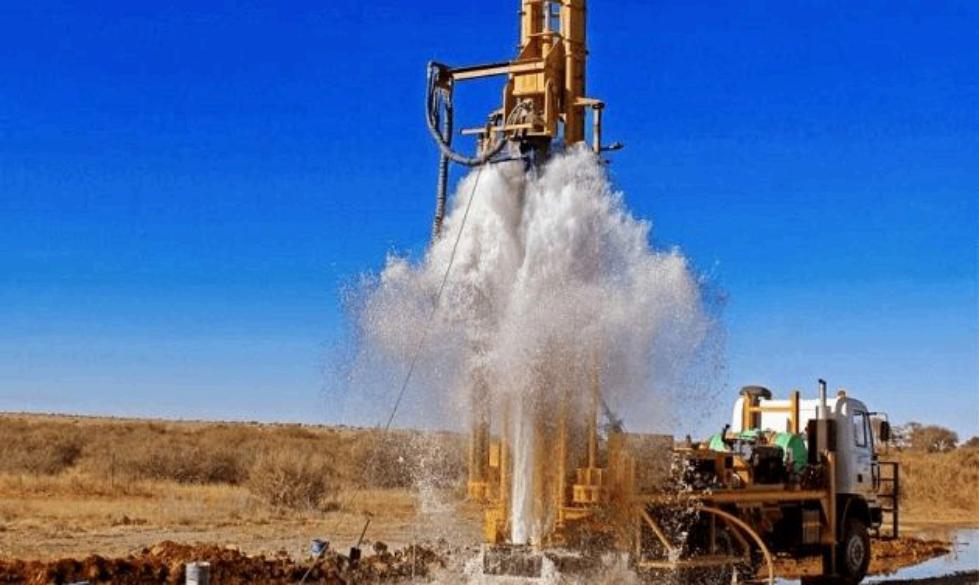
Step 6: Borehole drilling
The drilling operation penetrates the ground to reach suitable groundwater-bearing formations.
The drilling method and equipment depend on:
Geological conditions
Expected depth
Borehole diameter
Project specifications
Site conditions
During drilling, geological materials and drilling conditions are monitored.
Step 7: Casing installation
Casing is installed to support the borehole and protect it from collapse where required.
The borehole design may include:
Plain casing
Screen sections
Appropriate casing diameter
Gravel pack
Sealing materials
The final design depends on the geological conditions encountered.
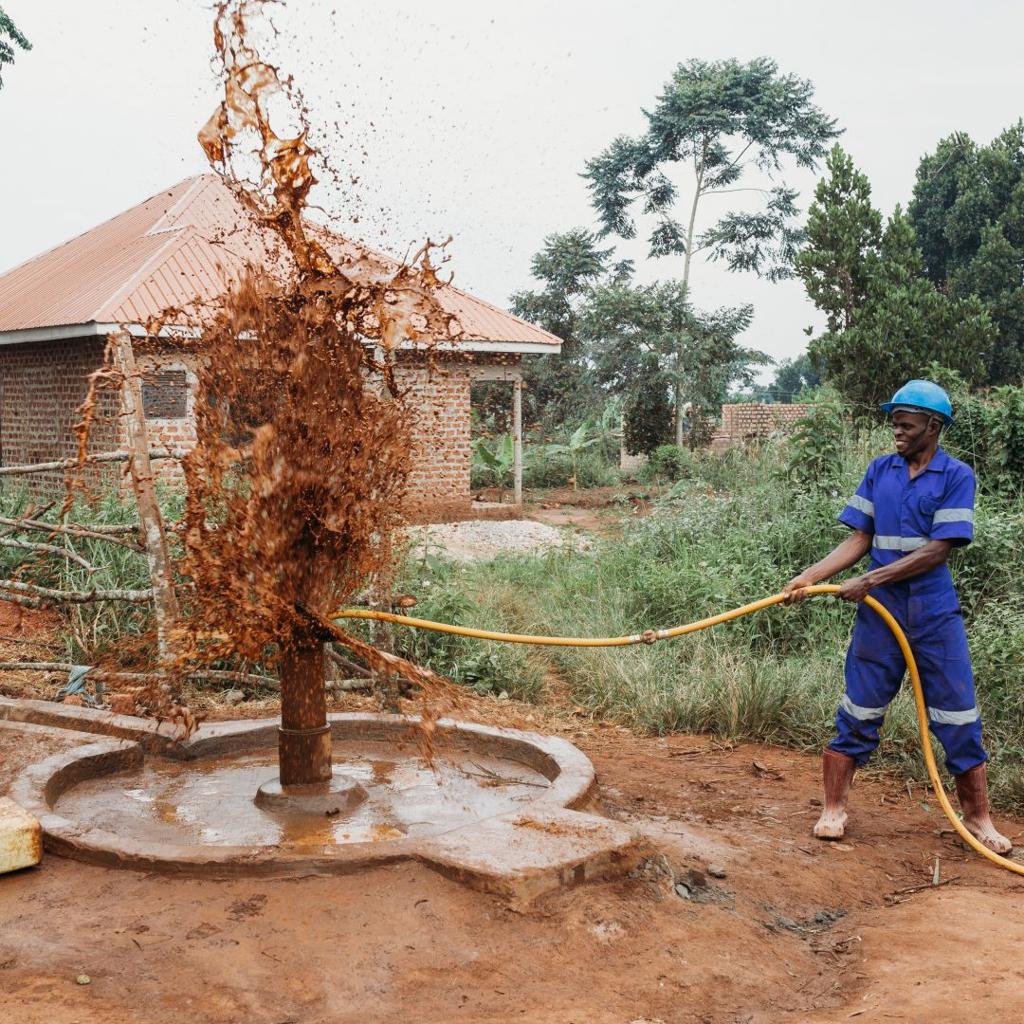
Step 8: Borehole development
Development removes drilling-related materials and helps improve the borehole’s performance.
The development process may involve pumping, surging, airlifting or other suitable methods.
Proper development helps reduce sediment and improve water clarity and borehole performance.
Step 9: Pumping test
A pumping test is conducted to assess borehole performance.
The test helps determine:
Pumping rate
Water-level drawdown
Recovery
Borehole performance
Appropriate pumping conditions
The results help guide the selection of a suitable pump.
Step 10: Water quality testing
Water samples are collected and tested to establish the water’s quality.
Testing is particularly important before water is used for:
Drinking
Food preparation
Commercial food production
Livestock
Irrigation
Institutional applications
Step 11: Pump installation
The appropriate submersible pump is selected according to:
Borehole depth
Water level
Tested yield
Required flow rate
Pumping head
Pipe diameter
Storage capacity
Electricity availability
Step 12: Storage and distribution
Water may be pumped into storage tanks and distributed to the property.
The installation may include:
Ground tanks
Elevated tanks
Tank stands
Water pipes
Pressure pumps
Distribution lines
Float switches
Control panels
Step 13: Commissioning
The completed system is tested to confirm that the borehole, pump, piping, storage and controls operate correctly.
The client receives guidance on operation and maintenance.
Borehole Drilling for Residential Homes in Meru County
Homeowners throughout Meru may consider drilling a borehole to improve water independence.
Residential boreholes are suitable for:
Detached homes
Residential compounds
Villas
Apartments
Rental properties
Gated communities
Rural homesteads
New housing developments
A residential system can be customized depending on household size and daily consumption.
Typical residential borehole system
A complete residential system may include:
Groundwater survey
Borehole drilling
Casing
Screens
Borehole development
Pumping test
Water analysis
Submersible pump
Electrical installation
Solar pumping where required
Water storage tanks
Tank support structure
Distribution pipes
Filtration
Water treatment
Boreholes for apartments
Apartments have greater water demand than individual homes.
The borehole system must be designed to serve the number of residents and the property’s daily demand.
The design may include:
Higher-capacity storage
Larger pumps
Multiple tanks
Pressure booster pumps
Distribution piping
Automated controls
Backup power
Boreholes for rental properties
Landlords may use boreholes to improve water availability for tenants.
A reliable water system can reduce dependence on water deliveries and improve the convenience of residential properties.
Borehole Drilling for Agriculture in Meru
Agriculture is a major activity in Meru County, making water an important input for production.
Boreholes may support farms growing:
Vegetables
Fruits
Horticultural crops
Greenhouse crops
Coffee
Tea in suitable areas
Avocado
Bananas
Other crops suited to local conditions
Irrigation boreholes
An irrigation borehole should be designed according to the farm’s water demand.
Factors include:
Farm size
Crop selection
Soil type
Irrigation method
Crop growth stage
Seasonal demand
Water availability
Storage
Pumping hours
Boreholes for greenhouse farming
Greenhouses require dependable water for irrigation and crop management.
A greenhouse borehole may be integrated with:
Storage tanks
Drip irrigation
Fertigation systems
Filters
Solar pumps
Automated irrigation controls
Boreholes for fruit farms
Fruit production may require reliable irrigation during periods of limited rainfall.
The system should be planned to deliver water efficiently without over-pumping the borehole.
Borehole Drilling for Livestock Farms in Meru County
Livestock farming requires dependable water for animals throughout the year.
Boreholes can provide water for:
Dairy cattle
Beef cattle
Goats
Sheep
Poultry
Pigs
Other livestock
A livestock borehole system should be designed around the number and type of animals being kept.
Water storage for livestock
Storage tanks are important because they allow water to be pumped during suitable periods and distributed when required.
The installation may include:
Borehole pump
Solar panels
Storage tanks
Water troughs
Distribution pipes
Float valves
Pump controllers
Boreholes for dairy farms
Dairy farms require water for drinking, cleaning, milk handling and general farm operations.
The system should provide sufficient water without exceeding the borehole’s sustainable yield.
Borehole Drilling for Schools, Churches and Institutions
GossTech Kenya Technologies also provides borehole drilling solutions for institutions throughout Meru County.
Potential clients include:
Primary schools
Secondary schools
Colleges
Universities
Churches
Hospitals
Health centres
Children’s homes
Rehabilitation facilities
Community centres
Religious institutions
School boreholes
Schools may require water for:
Students
Staff
Kitchens
Toilets
Handwashing
Cleaning
Gardening
Boarding facilities
A school borehole should be sized according to student population, staff numbers, boarding requirements and daily consumption.
Hospital boreholes
Healthcare facilities require reliable water for hygiene, cleaning, sanitation, patient care and other operations.
A hospital water system may require additional storage, treatment, redundancy and backup power.
Church boreholes
Churches and religious institutions may require water for congregations, community activities, sanitation and associated facilities.
Boreholes can also support community outreach and water distribution projects.
Borehole Drilling for Commercial Properties
Commercial establishments in Meru may require water for daily operations.
Boreholes can be considered for:
Hotels
Lodges
Restaurants
Shopping centres
Office buildings
Factories
Warehouses
Car washes
Commercial farms
Construction sites
Processing facilities
Boreholes for hotels and lodges
Hotels may require water for:
Guest rooms
Kitchens
Laundry
Swimming pools
Landscaping
Cleaning
Staff facilities
A commercial borehole should be planned around peak demand and appropriate water storage.
Boreholes for car washes
Car washes may consume significant quantities of water.
The system should include suitable water storage, filtration and efficient water-use practices.
Boreholes for construction projects
Construction sites may require water for:
Concrete mixing
Dust suppression
Workers
Cleaning
Site operations
A borehole may offer a practical water source where piped supply is unavailable or inadequate.
Solar-Powered Borehole Pumping in Meru County
Solar borehole pumping is an increasingly practical option for property owners seeking to reduce reliance on grid electricity.
GossTech Kenya Technologies can help plan solar-powered water systems for suitable borehole projects.
Components of a solar borehole system
A solar water pumping system may include:
Solar panels
Solar mounting structure
Submersible pump
Pump controller
Borehole cables
Water pipes
Storage tanks
Float switches
Protection systems
Benefits of solar borehole pumping
Solar pumping can provide:
Reduced electricity costs
Water pumping during sunny periods
Reduced dependence on grid electricity
Suitability for rural locations
Reduced generator fuel costs
Lower operating costs in suitable applications
Solar pumping for farms
Solar-powered boreholes can be particularly useful for farms located away from reliable electricity infrastructure.
Water can be pumped during the day into storage tanks, then distributed through irrigation systems or livestock troughs.
Solar pumping for homes
Residential solar borehole systems can provide water for domestic use while reducing electricity expenses.
The solar system must be sized according to pump requirements, pumping depth, daily water demand and available sunlight.
Borehole Water Storage Solutions
Water storage is an essential component of a reliable borehole system.
The borehole may produce water at a rate that differs from the property’s immediate consumption.
Storage allows water to be collected and used when required.
Water tank installation
Storage tanks may include:
Plastic tanks
Steel tanks
Concrete tanks
Ground-level tanks
Elevated tanks
Large commercial storage tanks
Elevated water tanks
Elevated tanks can help provide gravity-fed water distribution.
The height and capacity of the tank should be determined according to the property’s requirements.
Water distribution systems
A borehole water distribution system may supply:
Homes
Apartments
Farms
Livestock troughs
Irrigation systems
Commercial buildings
Institutions
Borehole Water Treatment in Meru County
Not all groundwater is immediately suitable for drinking.
Even water that appears clear may contain substances that require treatment.
Water testing
We recommend water quality testing before the borehole water is used for drinking.
Testing may assess:
pH
Electrical conductivity
Total dissolved solids
Hardness
Iron
Fluoride
Nitrates
Chlorides
Turbidity
Microbiological contamination
Water filtration
Depending on the test results, water treatment may include:
Sediment filtration
Sand filtration
Activated carbon filtration
Iron removal
Water softening
Reverse osmosis
UV disinfection
Chlorination
The treatment system should be selected according to the actual water quality rather than installing unnecessary equipment.
Drinking water treatment
Water intended for drinking and cooking should meet the applicable water quality standards.
A properly selected treatment system can improve water quality where specific contaminants have been identified.
Borehole Maintenance Services in Meru County
Boreholes require maintenance to remain reliable.
Routine maintenance can help identify problems before they result in complete water-system failure.
Common borehole problems
Property owners may experience:
Reduced water production
Pump failure
Low water pressure
Sand in water
Muddy water
Pump overheating
Electrical faults
Damaged cables
Pump control problems
Tank filling problems
Water quality changes
Borehole pump maintenance
Pump maintenance may involve:
Checking electrical connections
Inspecting pump controls
Testing pump operation
Checking water flow
Inspecting cables
Checking pipework
Monitoring pumping performance
Borehole rehabilitation
An existing borehole may sometimes require rehabilitation.
Possible services include:
Borehole inspection
Pump removal
Pump replacement
Borehole cleaning
Development
Sediment removal
Pumping tests
Water quality testing
The appropriate rehabilitation method depends on the cause of the borehole problem.
Borehole Drilling Costs in Meru County
The cost of drilling a borehole in Meru County depends on several factors.
These include:
Drilling depth
Geological formations
Borehole diameter
Casing requirements
Screen requirements
Drilling location
Mobilization
Groundwater conditions
Pump specifications
Water storage
Solar installation
Water treatment requirements
Distribution infrastructure
The following figures are indicative budgeting estimates only, not fixed quotations.
Estimated borehole drilling costs
| Service | Indicative Cost (KSh) |
|---|---|
| Hydrogeological survey | 40,000–100,000 |
| Geophysical survey | 35,000–100,000 |
| Permits and approvals | 30,000–150,000+ |
| Mobilization | 50,000–200,000+ |
| Drilling per metre | 6,000–12,000+ |
| Casing per metre | 2,500–6,000+ |
| Screens per metre | 3,000–7,000+ |
| Gravel pack | 20,000–100,000+ |
| Borehole development | 30,000–100,000+ |
| Pumping test | 30,000–100,000+ |
| Water quality testing | 15,000–50,000+ |
| Submersible pump | 50,000–300,000+ |
| Pump installation | 30,000–100,000+ |
| Electrical installation | 30,000–150,000+ |
| Solar pumping system | 150,000–800,000+ |
| Water storage tanks | 20,000–300,000+ |
| Tank support structure | 50,000–500,000+ |
Estimated complete borehole project budgets
| Project Type | Indicative Budget |
|---|---|
| Basic residential borehole | KSh 1.2M–2.0M |
| Residential borehole with pump and storage | KSh 1.5M–2.8M |
| Residential solar borehole | KSh 2.0M–4.5M+ |
| Commercial borehole | KSh 2.5M–4.5M+ |
| Institutional borehole | KSh 2.5M–5M+ |
| Agricultural borehole | Project-specific |
| Community borehole | Project-specific |
| Large irrigation borehole | Project-specific |
These estimates can change substantially depending on drilling depth, geology, borehole specifications, equipment and project requirements.
For an accurate quotation, the site location and intended water use should be assessed.
Areas Served for Borehole Drilling in Meru County
GossTech Kenya Technologies provides borehole drilling and water solutions across Meru County.
Our service coverage includes the following areas and surrounding communities.
Imenti Region
Meru Town
Nkubu
Mitunguu
Igoji
Nkuene
Abogeta
Imenti North
Imenti Central
Imenti South
Nyaki
Kirichu
Abothuguchi
Surrounding villages
Buuri Region
Timau
Kibirichia
Kiirua
Buuri East
Buuri West
Agricultural settlements
Rural homesteads
Tigania Region
Tigania East
Tigania West
Tigania Central
Mikinduri
Miathene
Muthara
Muriri
Karama
Athwana
Thangatha
Surrounding villages
Igembe Region
Maua
Kianjai
Laare
Nchiru
Kiengu
Mutuati
Igembe South
Igembe Central
Igembe North
Gitura
Surrounding settlements
We also serve properties in nearby areas and other counties through our nationwide service network.
Why Choose GossTech Kenya Technologies for Borehole Drilling?
Choosing a borehole contractor is an important decision because drilling is a substantial investment.
GossTech Kenya Technologies focuses on providing comprehensive borehole and water supply solutions.
Comprehensive borehole services
We can assist with multiple stages of the borehole project, including:
Groundwater surveys
Borehole siting
Drilling
Casing installation
Borehole development
Pumping tests
Water testing
Pump installation
Solar pumping
Water storage
Water distribution
Water treatment
Borehole maintenance
Solutions for different customers
We work with property owners and clients requiring water for:
Residential homes
Apartments
Farms
Greenhouses
Livestock
Schools
Churches
Hospitals
Hotels
Commercial buildings
Community projects
Customized water systems
We do not recommend using the same system design for every property.
A borehole intended for a family home has different requirements from a commercial farm, school, hotel or community water project.
The system should be designed around the client’s actual needs and the borehole’s tested performance.
Frequently Asked Questions About Borehole Drilling in Meru County
1. How much does borehole drilling cost in Meru County?
The cost depends on drilling depth, geology, casing, pumping equipment, storage and other project requirements. A complete borehole project may cost approximately KSh 1.2 million to several million shillings depending on the specifications.
2. How deep should a borehole be drilled in Meru?
Borehole depth varies from one location to another. A groundwater assessment and drilling observations help determine the appropriate depth. There is no single depth that applies to all of Meru County.
3. Can I drill a borehole in Meru Town?
Yes. Boreholes may be considered for suitable residential, commercial and institutional properties in Meru Town, subject to site assessment, groundwater potential, access and applicable approvals.
4. Can a borehole supply water for irrigation?
Yes, boreholes can supply irrigation water. However, the borehole’s tested yield must be evaluated against the farm’s water demand before designing the irrigation system.
5. Can solar panels power a borehole pump?
Yes. Solar-powered borehole pumping systems can be installed where appropriate. The solar system must be sized according to the pump, borehole depth, water demand and pumping requirements.
6. Is borehole water safe to drink?
Not automatically. Groundwater should be tested before drinking. Treatment may be required depending on the water quality results.
7. Do I need a groundwater survey before drilling?
A groundwater assessment is highly recommended. It helps guide borehole siting and drilling decisions, although it cannot guarantee groundwater or a specific yield.
8. Can you drill boreholes in rural parts of Meru?
Yes. We provide borehole drilling services for rural properties, farms, homesteads, institutions and community water projects, subject to site accessibility and project requirements.
9. Can an existing borehole be repaired?
In many cases, yes. Existing boreholes may require pump replacement, cleaning, rehabilitation, development, electrical repairs or water-system improvements.
10. Do you install water tanks and solar pumps?
Yes. Borehole projects can include pump installation, solar pumping systems, water storage tanks, tank support structures and distribution systems.
11. Do you serve Maua, Nkubu, Timau and Igembe?
Yes. Our borehole drilling services cover Meru Town, Maua, Nkubu, Timau, Mitunguu, Igoji, Kianjai, Laare, Tigania, Igembe, Buuri and other areas throughout Meru County.
12. Do you provide borehole drilling outside Meru?
Yes. GossTech Kenya Technologies provides borehole drilling and water solutions in Nairobi and Across Kenya.
Get a Borehole Drilling Quotation in Meru County
Are you planning to drill a borehole in Meru County?
Whether you need water for your home, farm, livestock, business, hotel, school, institution or community project, GossTech Kenya Technologies can assist you with borehole drilling and complete water supply solutions.
Our services include:
Groundwater surveys
Borehole siting
Borehole drilling
Borehole casing
Borehole development
Pumping tests
Water quality testing
Submersible pump installation
Solar borehole pumping
Water storage
Water distribution
Water treatment
Borehole maintenance and rehabilitation
We serve Meru Town, Maua, Nkubu, Timau, Mitunguu, Igoji, Nkuene, Imenti, Buuri, Tigania, Igembe, Kianjai, Laare, Mikinduri, Kibirichia, Kiirua and surrounding communities.
Contact GossTech Kenya Technologies
Phone: 0723613664
Email: info@gosstech.co.ke
Website: www.gosstech.co.ke
Professional Borehole Drilling Services in Meru County, Nairobi and Across Kenya.